
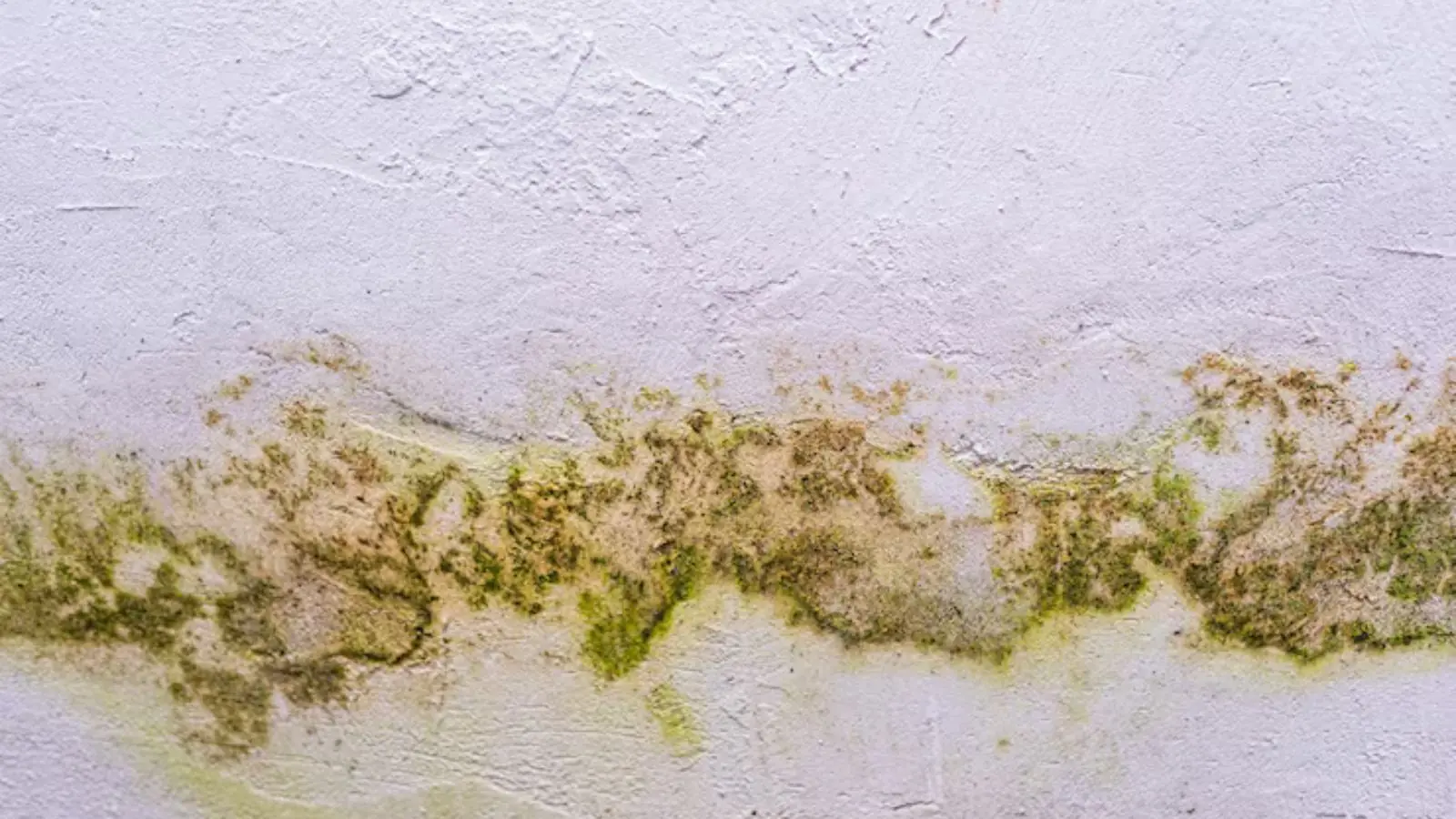
If you are asking what mildew is, in Lynnwood, WA the short answer is a flat, powdery or downy surface growth that appears where damp air sits on a cool surface. It is a name people use for early or surface-level mold.
Below we separate mildew from mold, show where it turns up around a house, explain when it points to a deeper problem, and give a moisture routine suited to wet Pacific Northwest months.
Mildew in plain terms
Mildew is a type of fungal growth that lies on the surface of a material rather than burrowing in. It often looks white, gray or pale yellow, and it can be powdery or flat. Outdoors it forms on plants, siding and patio furniture, and indoors it favors shower walls, window frames and fabric.
The word is also used loosely. Many homeowners say mildew for a light surface film and mold for something thicker or darker. Scientists use more specific terms, so treat the label as a rough guide and judge the situation by size, location and moisture.
Mildew versus mold: how people tell them apart
| Feature | Mildew | Mold |
|---|---|---|
| Typical color | White, gray or pale yellow | Green, black, brown, white or a mix |
| Texture | Flat, powdery or downy | Fuzzy, raised, slimy or speckled |
| Where it sits | On the surface of a material | On the surface and sometimes into porous material |
| Common spots | Shower tile, window sills, siding, fabric | Drywall, ceilings, insulation, framing, carpet pad |
| Typical fix | Dry the surface and wipe a hard material with detergent | Find the moisture, then containment and removal for larger areas |
The line between the two is blurry in practice. Color alone cannot sort them, so treat any growth near a moisture source as a sign to fix the source.
Where mildew shows up around the house
Bathrooms come first, with grout, caulk and the lower edge of the shower curtain. Next are window tracks where condensation collects, closets against exterior walls and the backs of couches pushed tight to a cold wall.
Outside, look at the north and shaded sides of siding, deck boards and fences. Garage walls and storage boxes on a concrete slab can mildew when air barely moves. Basement shelves and crawl space joists are also common spots, and they deserve more attention than a quick wipe.
Water still spreading? The emergency line is open around the clock.
☎ Call (425) 592-3399Surface film or deeper problem?
Mildew on a tiled shower wall that clears with a detergent wipe and does not return is usually a ventilation habit to improve. Mildew that comes back within weeks, spreads onto drywall or paint, or goes with a musty smell is telling you moisture is still present.
Watch for peeling paint, bubbling, soft baseboards, warped trim and spots that follow the line of a pipe or an exterior wall. These suggest water is moving through the structure, and the growth you can see may be the smaller part. Photograph the area, press a dry paper towel against it, and note the date.
A moisture routine for a rainy Puget Sound climate
Wet seasons here are long, and indoor humidity climbs when windows stay shut. Small, steady habits do more than any cleaner.
- Run bathroom and kitchen fans during use and for a while afterward, until mirrors clear and walls feel dry
- Wipe shower walls and windowsills when you see condensation
- Keep furniture a few inches off exterior walls so air can move
- Clean gutters and aim downspouts away from the foundation
- Use a dehumidifier in a basement or a closed room that stays damp
- Dry laundry outdoors or in a vented dryer, not on indoor racks all winter
- Check under sinks and around the water heater each month
A cheap hygrometer shows your indoor humidity. If it stays high for days at a time, that is a cue to ventilate or dehumidify, and a pattern worth mentioning if you ever call about a musty room.
When it is time to call
Call when growth covers a larger area, returns after cleaning, sits on drywall or ceiling, or goes with a leak, a soft surface or a lingering smell. A crew can trace moisture with a meter and a thermal imaging camera and tell you whether you are looking at a surface problem or something in the wall.
If water has recently been in the house, water damage repair covers the drywall and finish work after drying, and the mold remediation page explains containment and removal. Ask whether your state licenses mold work, and ask any company whether it follows ANSI/IICRC S520. Health questions go to your physician.
Lynnwood note: creeks, drainage and why your gutters matter
The City of Lynnwood's 2022 Stormwater Management Program lists the water bodies in its surface water system, including Scriber Lake and Creek, Hall Lake and Creek, Tunnel Creek, Poplar Creek, Golde Creek and Perrinville Creek. The City's own Scriber Lake Park page adds that the lake is regulated as a stormwater holding facility.
That is a reminder that water moves across and under this city on purpose, and a property near one of these channels may see damp soil and humid air near the foundation. Roof water that dumps beside a wall adds to it.
If you live near a creek or low spot, give gutters and grading extra attention, and ask the City's Public Works staff about drainage near you. Owners in Mukilteo and Mountlake Terrace can follow the same gutter and slope checks.
Questions we hear
Is mildew dangerous?
Health questions are outside what a restoration company can answer. Anyone with breathing concerns or other health questions about indoor growth should ask a physician.
From a house standpoint, mildew is a signal of excess moisture, and it is worth fixing for that reason alone.
Can I use a dehumidifier to stop mildew in my basement?
A dehumidifier helps when the problem is humid air. It will not solve a leak, a damp foundation wall or groundwater coming through a floor.
Empty it often or use a drain hose, and place it where air can reach it.
Why does mildew keep showing up on the north side of my siding?
That side gets less sun, stays damp longer and sees little air movement. In a wet climate, the surface never fully dries.
Trim back plants, clean the siding in dry weather and make sure gutters are not overflowing onto it.
Should I replace my shower caulk if mildew keeps coming back?
Often yes. Caulk with dark staining that wipes clean for a day and returns has usually absorbed moisture. Cut it out, let the joint dry for a day or two, and apply fresh sealant.
If the wall behind the caulk is soft, stop and have it checked before you seal over it.
What is the difference between mildew on tile and mildew in drywall?
Tile does not absorb water, so a surface film can often be wiped. Drywall is porous and the growth can sit in the paper face.
Growth on drywall that returns after cleaning needs a moisture check.
Have a question the answers above did not cover? Call the line and ask.
☎ Call (425) 592-3399