
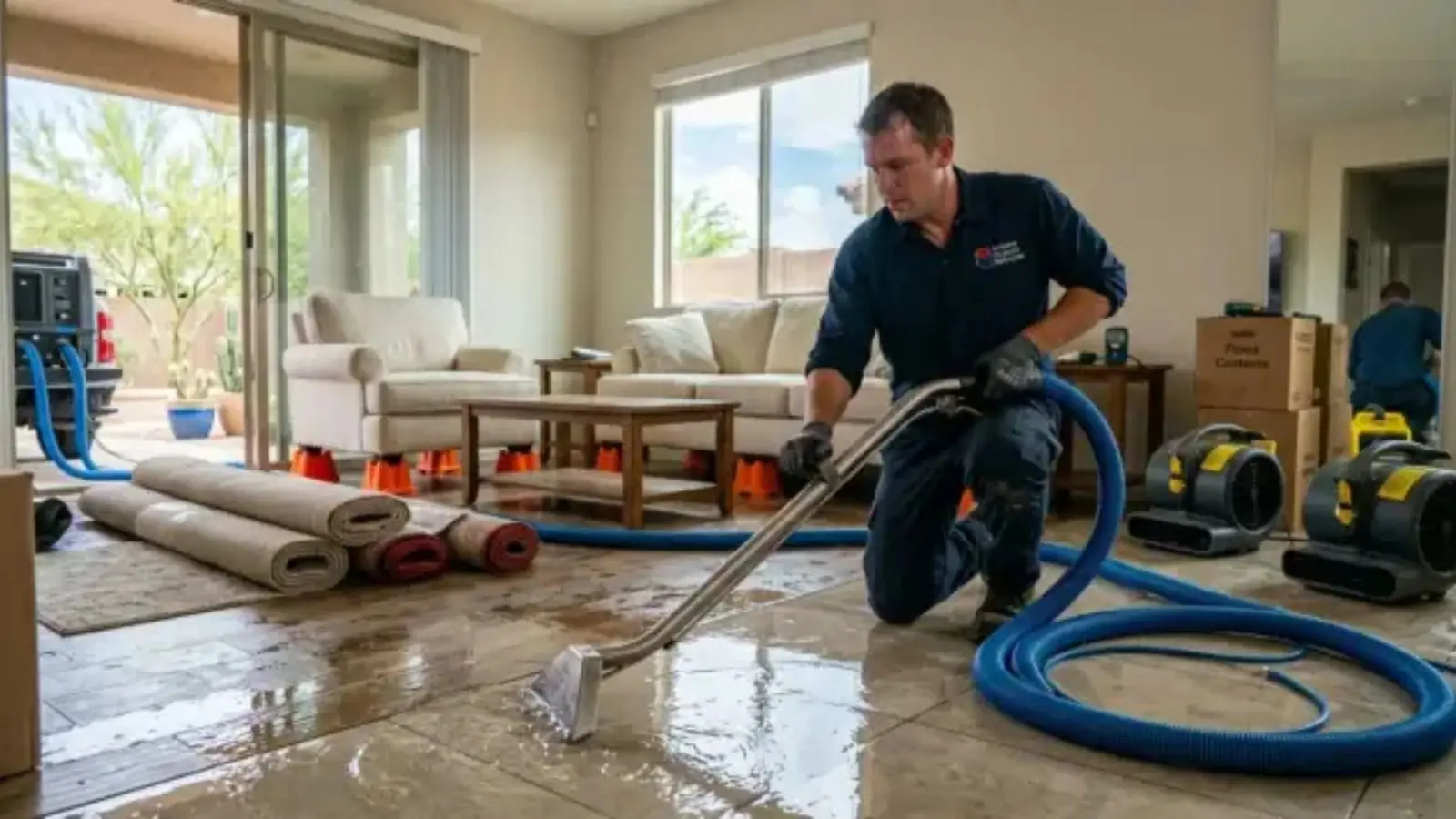
Water is on the floor right now, and every minute it spreads into walls, pad and subfloor. For emergency water removal in Lynnwood, WA, call our 24/7 line, then stop the source if you safely can. Close the main water valve, lift valuables and electronics off the floor and keep people and pets out of the wet area.
Cut power to wet rooms only if the panel is dry and safe to reach. If water touches the panel, outlets or gas, stay out and read the safety block below.
Do this while you wait for the crew
These steps limit the damage before extraction starts. Do only what is safe, and skip anything that puts you in standing water near electricity.
- Stop the source. Close the main shutoff, the fixture valve or the appliance valve.
- Turn off power to the wet area at the breaker, only if the panel is dry and you do not have to wade to reach it.
- Lift valuables, rugs, electronics and paperwork onto dry furniture or upper floors.
- Take photos and short video of the water and the damage before anything moves.
- Keep children and pets out, especially if the water came from a drain or from outside.
- Stay on the phone line until the dispatcher has your street, the water source and the rooms affected.
Safety first: electrical panel, gas and sewage
Stay out and call the utility or 911 before the restoration line
If water is touching the electrical panel, outlets, a gas appliance or a gas meter, or you smell gas, do not go in. Call your electric utility, your gas utility or 911 first. The city's public works page lists Snohomish County PUD for electricity and Puget Sound Energy for natural gas.
If the water is sewage, raw and dark with a strong odor, keep everyone out, including pets. Do not run taps or flush toilets, since that sends more into the house. Call us from a dry spot, and we will walk you through next steps.
Water still spreading? The emergency line is open around the clock.
☎ Call (425) 592-3399How standing water is extracted
Extraction starts with the bulk. A submersible pump handles water deeper than an inch or two, and a portable extraction unit with a wand pulls water from carpet, pad and flat floors. The pump hose runs outside to a safe drain point, not into your yard drain if the water is contaminated.
Once the standing water is gone, the wet part is not over. Pad, subfloor and wall bases hold moisture that a pump cannot reach, so crews take moisture meter readings and thermal imaging scans to map what is still wet.
From there the job moves into structural drying with air movers and dehumidifiers. If the water was contaminated or the debris is heavy, the cleanup and sanitizing stage runs alongside it.
Burst pipe water damage
A burst supply line keeps running until someone shuts it off, so the first move is the main shutoff valve. It is usually where the line enters the house, near the water heater, on a basement wall or in the outside meter box. After it is closed, open a low faucet to drain the lines.
Under a sink, close the small oval stop valve on the wall by turning it clockwise. For a failed washing machine hose or valve, close the two valves behind the machine, or the main if they will not turn. An ice maker line has its own small valve, often behind the refrigerator or in the cabinet below it.
When the crew arrives, they confirm the water is off and check for electrical risk. Then they extract standing water, pull wet pad and baseboard, and trace where water traveled inside walls and under floors with a moisture meter and thermal imaging camera. Photos and readings are taken before anything is removed.
Crawl space with water
Water under the house is easy to miss because nobody looks there. Wet insulation sags, ducts sit in water, and the floor above can cup or soften before you see anything inside. A sagging belly pan or a squishy floor near a bathroom are common signs.
Crews size up the space first, then set a submersible pump in the low spot and run the hose out. Wet insulation comes down and goes in bags, and air movers and dehumidifiers dry the framing. Wiring runs through many crawl spaces, so do not enter if there is standing water near outlets or junction boxes.
If the water keeps coming back after pumping, the source may be groundwater or drainage, and fixing that belongs to a different trade. Left wet for weeks, a crawl space can develop a musty smell and lead to a separate mold remediation job.
Which situation are you in
Use this table to decide your first move. When in doubt, call, and the dispatcher will sort it out with you.
| Situation | Do this first | Who to call first |
|---|---|---|
| Pipe burst, panel is dry | Close the main valve and open a low faucet | Our 24/7 line |
| Water touching outlets or the panel | Do not enter the room | Electric utility or 911, then our line |
| Smell of gas | Leave the house | Gas utility or 911 |
| Sewage from a floor drain or toilet | Keep out, stop using water | Our line from a dry spot |
| Washer or ice maker line failure | Close the small fixture valve | Our line if water reached floors |
| Water in the crawl space | Do not crawl in | Our line |
What Lynnwood water sources mean for you
Alderwood Water & Wastewater District wholesales water to the City of Lynnwood and also serves some customers inside city limits directly, according to the city's water plan. That means the utility on your bill may differ from your neighbor's. If the break is on the street side of your meter, the utility named on your bill handles it, not a restoration crew.
The city's own flood study documents repeated Scriber Creek flooding between 188th St SW and 196th St SW, in 2006, December 2007 and November 2012. Water that comes in from outside is treated as contaminated, so if your property is on that stretch, tell the dispatcher that the water came from the creek or the street. See also our flood damage restoration page.
Crews also work in nearby Edmonds, and the same extraction steps apply there.
What affects the cost of water removal
Pricing follows the job, not a flat rate. These are the main factors:
- Depth and volume of water, which sets pump time and the number of extraction passes.
- Water category, since contaminated water needs protective gear and careful disposal.
- Which floors and rooms are affected, including basements, crawl spaces and upper floors.
- Materials that must come out, such as pad, baseboard or drywall.
- Drying days and equipment needed afterward, and any rebuild.
Scope and price are explained before work starts. For a real number on your house, call the 24/7 line.
Insurance and water removal
A general note on insurance
Sudden and accidental water, like a burst pipe or failed appliance hose, is often covered. Gradual leaks and neglect often are not, and flood damage is usually excluded from standard homeowners policies. Check your policy or ask your insurer before you decide.
Crews document the water, readings and removed materials with photos, so you have records to hand your insurer. Do not throw out damaged items until you have photos.
Why every hour counts with active water
Water spreads sideways and upward. In a few hours it wicks up drywall, soaks into baseboards and runs under flooring to the next room. The sooner it is pumped out, the more of your carpet, pad and framing stays dry enough to save.
We offer same-day response when available, including nights, weekends and holidays. If you are not sure the situation counts as an emergency, call anyway. A short call costs nothing and clears up what to do next.
Questions about this service
Do you handle emergency water removal at night or on weekends in Lynnwood?
Yes. The line is answered at all hours, and we offer same-day response when available, including overnight, weekends and holidays. A burst pipe at midnight gets the same treatment as one at noon.
Close the main valve and lift valuables while you wait, and keep out of any water near the panel.
Water is coming through my ceiling. What should I do?
Move out from under it, shut off the water if it is a plumbing leak above, and move furniture and valuables away. A bulging ceiling can drop without warning, so keep people out of that room.
Call the line right away. The crew will check for water in the ceiling cavity and the room below before any drying begins.
How long does it take to remove standing water?
Pumping a basement or room often takes hours, depending on depth and volume. Pulling moisture out of pad, wall bases and subfloor takes longer and moves into drying.
The crew gives you a realistic plan after checking with moisture meters, not before.
Can you pump out a crawl space with water in it?
Yes. Crews set a submersible pump at the low point and run the hose out, then remove wet insulation and dry the framing. Do not enter if water sits near wiring.
If water keeps returning, the cause may be groundwater or drainage. That is fixed by a different trade, and we will tell you so.
Do you rent out pumps, air movers or dehumidifiers?
No. We do not rent equipment, and we run it ourselves on jobs. Air movers push air across wet surfaces and LGR dehumidifiers pull moisture out of that air, and the setup depends on readings taken each visit.
Equipment left running with no monitoring can leave hidden areas wet, which is why drying is done by the crew.
What if the water is sewage from a basement drain?
Keep everyone out of the area, do not run water or flush toilets, and call us from a dry room. Sewage is Category 3 water and calls for protective gear and careful removal.
If you smell gas or water touches electrical equipment, call the utility or 911 first.
Will insurance cover water removal?
Sudden and accidental water damage is often covered, and flood damage usually is not without separate flood coverage. Check your policy or ask your insurer.
Take photos before anything moves. Crews add moisture readings and a written scope for your records.