
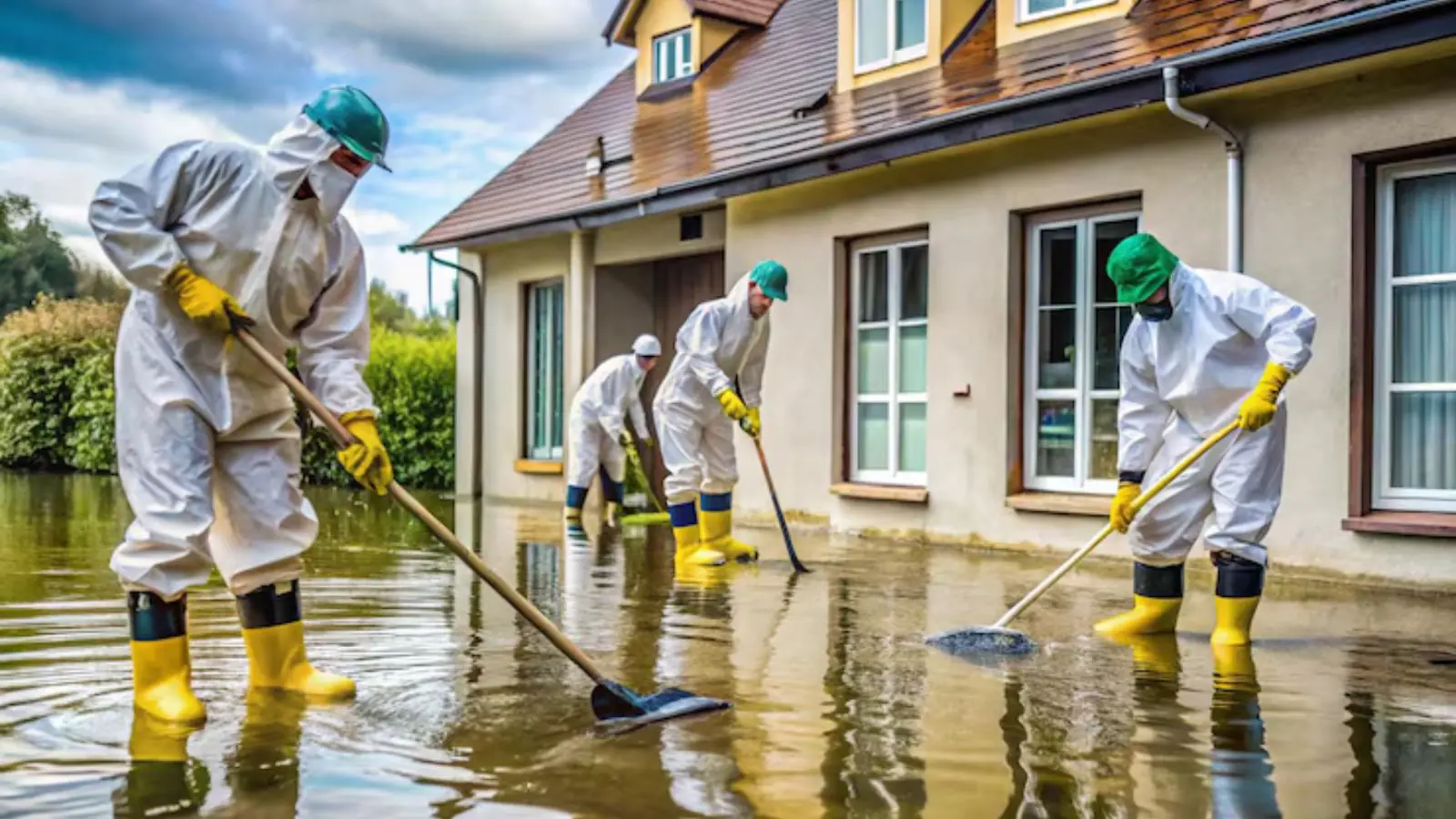
The pipe is shut off, but the carpet is soaked, the drywall is wicking water upward and the room smells damp. That is when emergency water damage cleanup in Lynnwood, WA matters most, and our 24/7 line is the place to start. While you wait, keep the main valve closed and lift valuables onto dry surfaces.
Switch off power to wet areas only if the panel is dry and safe to reach. Keep people and pets out of any water that came from a drain, a toilet or the outdoors.
What cleanup covers once the water source is stopped
Cleanup is the hands-on removal stage. Crews pull out standing water, wet debris, ruined flooring layers and anything the water contaminated, then clean and sanitize the surfaces that remain. It comes after the leak or flood source is stopped and before the drying stage begins.
Drying is its own job with its own gear. If walls and subfloor are still wet after the debris is gone, read how structural drying works and why it usually takes several days.
The goal is plain. Take out what cannot be saved, protect what can, and leave clean surfaces ready for drying and rebuild.
The first 48 hours decide how much comes out
Wet drywall, pad and insulation break down fast. Baseboards swell and paint bubbles within a day. By the second day, damp materials often smell musty, and hidden cavities behind cabinets stay wet even when the room feels dry to the touch.
This is the usual sequence on a cleanup job, from the first call to the handoff to drying.
- First hours: stop the source, shut the main valve, move valuables and photograph the damage.
- Day one: extract standing water, pull soaked carpet pad and bag wet debris.
- Day two: cut out materials that cannot dry, clean the exposed surfaces and apply antimicrobial treatment.
- Day three onward: air movers and LGR dehumidifiers dry the structure while crews take moisture meter readings at each visit.
Water still spreading? The emergency line is open around the clock.
☎ Call (425) 592-3399What gets removed and what gets saved
Crews sort materials one by one with a moisture meter and a thermal imaging camera, not by guesswork. The same material often gets a different answer depending on the water category.
| Material | Clean water from a supply line | Category 2 or 3 water |
|---|---|---|
| Carpet pad | Usually removed, since it holds water like a sponge | Always removed |
| Carpet | Often lifted, dried and saved if caught early | Usually discarded |
| Drywall | Cut out above the wet line if soaked through | Cut out well past the wet line |
| Insulation | Removed if saturated or compressed | Removed |
| Wood framing and concrete | Dried in place | Cleaned, sanitized and dried in place |
| Furniture and contents | Wiped, dried and often saved | Hard items cleaned, porous items usually discarded |
Framing and concrete almost always stay. They get cleaned and dried instead of torn out, which keeps the rebuild smaller.
Category 2 and Category 3 water handling
Category 1 water comes from a clean source, like a broken supply line. Category 2 carries some contamination, such as washing machine or dishwasher overflow. Category 3 is the worst grade and includes sewage, toilet backup with waste and water that came in from outside.
Water also moves up a category as it sits, so a day-old leak can be treated more strictly than a fresh one. Porous materials soaked by Category 3 water, like carpet, pad and drywall, come out rather than getting cleaned in place.
Crews wear protective gear, seal off the work area with plastic sheeting and bag contaminated debris on site. Hard surfaces and framing get a cleaning pass, then antimicrobial treatment.
Sewage, floodwater or electrical risk: stay out first
If water has reached outlets, the electrical panel or a gas appliance, stay out of the room. Call your electric utility (Snohomish County PUD per the city's public works page), your gas utility (Puget Sound Energy) or 911 before you call the restoration line.
If sewage is involved, keep everyone out of the area, including pets, and do not wade in to rescue items. Call us from a dry room.
Antimicrobial treatment and deodorizing
After the debris is out, crews wipe or spray exposed framing, subfloor and concrete with an antimicrobial product matched to the surface. Fine dust from demolition is picked up with a HEPA vacuum, and HEPA air scrubbers run while the work is under way.
Odor leaves when its source leaves. Spraying fragrance over a wet pad only hides the smell for a day or two, so deodorizing comes after removal. Crews then use air scrubbing or thermal fogging where the smell has soaked into the structure.
What Lynnwood homes mean for your cleanup
Census data (ACS 2023) puts Lynnwood's median home build year at 1979, and roughly half of the city's 17,617 housing units were built before 1980. Older houses often have remodel layers, such as vinyl over older flooring, so one leak can reach more material than it first appears. Crews check under the top layer before calling a room clear.
Near Scriber Creek, the city's own flood study documents repeated flooding between 188th St SW and 196th St SW, with events in 2006, December 2007 and November 2012. Creek and storm drain overflow counts as Category 3 water, so on those streets expect more removal and more sanitizing than a supply-line leak needs. Tell the crew your street when you call.
Storm and flood declarations for the region are made at the county level, so they say little about one address. What matters is where your water came from, because that sets the category. We also take calls from nearby Mountlake Terrace, where the same cleanup steps apply.
What drives the cost of cleanup
Cleanup pricing follows scope, not a flat rate. These are the factors that move it most:
- Water category, since Category 3 needs more removal, protective gear and disposal.
- Affected area, meaning how many rooms and how much flooring, wall and ceiling is wet.
- Materials involved, because carpet and pad come out faster than tile, plaster or hardwood.
- Access and debris volume, including stairs, crawl spaces and haul-out distance.
- The drying stage that follows, and the rebuild scope after that.
Scope and price are explained before work starts. For a real number on your house, call the 24/7 line.
Insurance and cleanup records
A general note on insurance
Sudden and accidental water damage, such as a burst pipe, is often covered, while gradual leaks and neglect often are not. Coverage differs by policy, so check your policy or ask your insurer before you decide anything.
Crews photograph the damage, take moisture readings and write down what was removed, which gives you material for your own claim. Keep any receipts and bag samples of removed materials if your insurer asks for them.
Call now if water is still spreading
Every hour wet material stays in place, more of it has to come out. A soaked pad that could have been saved on day one often becomes a full tear-out by day three.
We offer same-day response when available, including nights, weekends and holidays. When the walls are open and the debris is gone, the next step is the water damage repair stage, where new drywall, flooring and paint go in. If water is still standing, start with emergency water extraction first.
Questions about this service
Do you handle water damage cleanup emergencies at night or on weekends in Lynnwood?
Yes. The line is answered at all hours, and we offer same-day response when available, including overnight and on weekends and holidays. A burst pipe or sewage backup does not wait for business hours, and neither does the cleanup.
While you wait for the crew, shut the main water valve, move valuables off wet floors and keep people out of any water that came from a drain.
What is the difference between water damage cleanup and drying?
Cleanup removes water, wet debris and contaminated materials, then sanitizes and deodorizes. Drying uses air movers and LGR dehumidifiers to pull moisture out of the materials that stay.
Most jobs need both, usually one right after the other. Cleanup comes first so that drying equipment is not working against materials that cannot be saved.
My carpet is soaked after a leak. Can it be saved?
Often yes, if the water was clean, it has not sat long and the pad is replaced. The carpet is lifted, dried and put back, while the pad is usually thrown away.
If the water came from a sewer, a toilet with waste or outside flooding, carpet is usually discarded. Crews confirm with a moisture meter before deciding.
What are Category 2 and Category 3 water, and why do they matter?
The categories describe how contaminated the water is. Category 1 is clean supply water, Category 2 has some contamination, and Category 3 includes sewage and floodwater from outside.
Higher categories mean more material removed, more protective gear and stricter cleaning. They are part of the published ANSI/IICRC S500 standard, and you can ask any company whether its crews work to it.
Does cleanup include sanitizing and odor removal?
Yes. After debris is removed, surfaces get an antimicrobial treatment, and HEPA air scrubbers run during demolition. Deodorizing follows removal, because smell comes from the wet material itself.
If a musty smell remains after drying, tell the crew. It can point to a damp cavity that has not been opened yet.
Will my insurance pay for water damage cleanup?
Sudden and accidental water damage is often covered, and gradual leaks often are not. Flood damage is usually excluded from standard homeowners policies and needs separate flood coverage.
Check your policy or ask your insurer. Crews document the loss with photos and moisture readings so you have records for your own claim.
Can I clean up water damage myself?
Small clean-water spills on hard floors, yes. Anything involving sewage, outside floodwater, wet insulation or water inside walls is better left to a crew with extraction units, protective gear and moisture meters.
Never touch wet outlets or stand in water near the panel. Call your electric utility or 911 first if there is any electrical risk.