
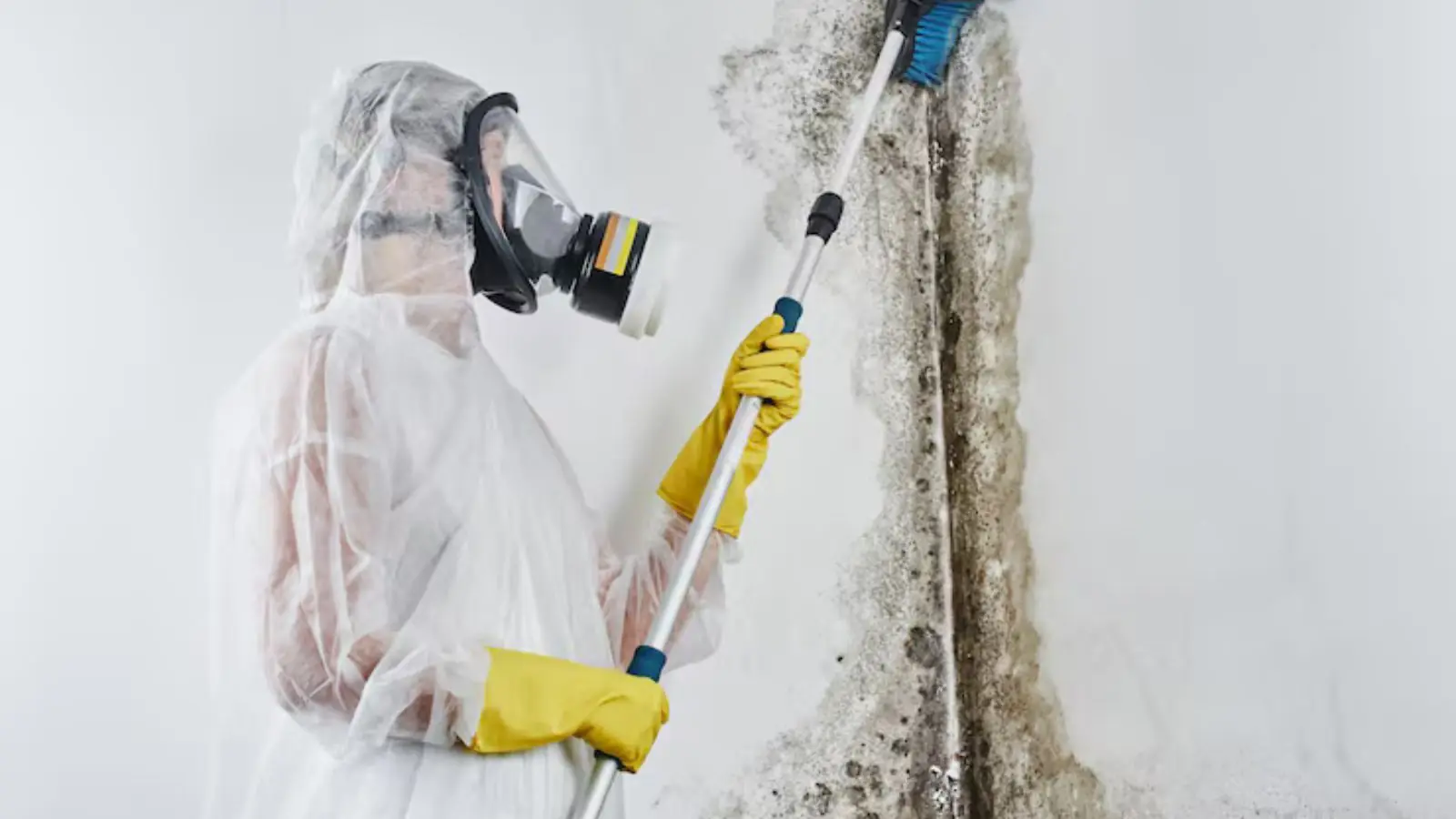
Mold remediation in Lynnwood, WA is the work of containing, removing and cleaning mold-affected materials after moisture has been dealt with. Most calls start with a damp smell, a dark patch or a stain that came back after a leak was fixed.
We handle remediation as a follow-on to water damage work, so the leak, the drying and the cleanup are all part of one plan. Call the line and describe what you see, and we will explain what the visit involves.
Musty smell, dark spots or a ceiling stain after a leak? That is where mold remediation starts
A closet that smells damp, black spotting along a window sill, or a brown ceiling stain that returns after you paint over it are common reasons homeowners call. The stain tells you water was there. It does not tell you what is growing on it, or how far it reaches behind the surface.
That gap between what you can see and what is inside the wall is where remediation comes in. A trained crew checks the moisture, finds how far the affected area runs, and plans containment and removal. The service covers the part that wiping and repainting cannot reach.
Questions about how mold affects your health belong with a physician. Our job is the building: finding the wet material, controlling dust and removing what cannot be cleaned.
Mold after water damage
Mold needs moisture. After a leak or flood, wet drywall, carpet pad, framing and insulation can stay damp for days, and that moisture is what lets growth start. The first step is always to fix the leak and dry the area. If the structure is still wet, cleaning surface mold only gives it a chance to return.
Drying comes first through professional structural drying, which uses air movers and LGR dehumidifiers and follows moisture meter readings. Once the readings are back to normal, remediation and rebuild can go ahead.
Common sources of moisture behind mold calls are listed here:
- An upstairs toilet that leaks at the supply line or wax ring and stains the ceiling below.
- A sink drain or supply line leaking inside a vanity cabinet.
- An AC condensate line that backs up and drips into a ceiling or closet.
- A roof leak that runs into attic insulation and ceiling drywall.
- Siding or window flashing that lets rain into a wall cavity.
After remediation, damaged drywall, trim and flooring are replaced under water damage repair.
Mold removal and black mold cleanup
Black mold is a popular name for dark growth, but color alone does not say what it is. The steps for removing dark growth and lighter growth are the same, so the work is planned around where it is and what material it sits on.
The crew builds containment first. Plastic sheeting seals the work area, a negative air setup keeps dust from drifting into other rooms, and HEPA air scrubbers filter the air during the work. Everyone entering wears protective gear.
Porous materials with growth, like drywall, insulation, carpet and ceiling tile, are cut out and bagged. Wood framing and other solid surfaces are cleaned with HEPA vacuums and wiped, and sanded or scrubbed where the surface allows. The published ANSI/IICRC S520 standard covers mold remediation, and you can ask any company whether its crews work to it.
When the work is done, surfaces are checked and the area is left ready for rebuild or for independent clearance testing.
Water still spreading? The emergency line is open around the clock.
☎ Call (425) 592-3399What is done for each type of mold problem
The right approach depends on the material and how deep the problem goes. This table shows what is typically done.
| Situation | What is typically done | What to know |
|---|---|---|
| Surface growth on non-porous material, like tile, glass or metal | Cleaned in place with HEPA vacuuming and wiping | Moisture source must still be fixed |
| Growth on porous material, like drywall, carpet, insulation or ceiling tile | Cut out, bagged and replaced | Cleaning in place is not reliable on porous material |
| Hidden growth inside a wall or ceiling cavity | Cavity opened under containment, wet material removed, framing cleaned | Needs moisture readings before and after |
| Growth on structural wood | Cleaned with HEPA vacuuming and surface cleaning, sometimes sanded | Wood must be dry before it is closed up |
Mold testing, inspection and clearance testing
An inspection looks at moisture readings, water history and visible growth. Air or surface sampling can be added, and a lab reports what it finds. Testing results do not diagnose anything, and they are a snapshot of one day.
Clearance testing comes after remediation. An independent tester, who does not work for the remediation company, checks that the area is clean and dry enough to close up. Independent matters because the person who did the work should not grade it.
Clearance is also requested for a home sale or a buyer's lender. Ask the lender, the agent or the escrow officer what they require, since we cannot say what a given lender will accept. Request the written clearance report and keep it with the house records.
How a remediation job runs
Every home is different, but most jobs follow the same order. Knowing it helps you compare what different companies describe.
Inspect and map
The crew takes moisture readings with a meter, scans walls with a thermal imaging camera and marks the affected area.
Set containment
Plastic sheeting seals the area, and HEPA air scrubbers start filtering the air before any material is touched.
Remove affected material
Porous materials with growth are cut out and bagged, and bags are taken out in a way that keeps dust inside.
Clean and dry
Framing and hard surfaces are HEPA vacuumed and cleaned, then dried until readings are back to normal.
Verify and rebuild
Independent clearance testing is optional but common for sales. Rebuild follows once the area is dry and signed off.
Most small jobs finish in a day or two, while hidden growth in several rooms takes longer. The crew gives a schedule after the inspection, not before.
What to do first if you suspect mold
Stop the moisture
Find the leak and shut it off. Close the supply valve to a leaking fixture, or tarp a roof leak, and call a plumber or roofer if the source is not yours to fix.
Do not disturb it
Skip scrubbing, sanding or running a fan across it. Disturbing growth spreads dust to other rooms.
Photograph and note
Take photos of stains, smells and any recent leak. Write down the dates for your insurer.
Keep the area dry
Run a dehumidifier in the room if you have one, and keep doors closed to the rest of the house.
Call the line
Describe what you see and where. We will explain the process and what an inspection involves.
Lynnwood homes and moisture
Census data (ACS 2023) puts Lynnwood's median home build year at 1979, and roughly half of the city's 17,617 housing units were built before 1980. Older roofs, siding, flashing and plumbing have had more years to wear. A slow leak that went unnoticed for months is a common cause of the mold calls we get.
If your home sits near Scriber Creek, the city's flood study documents flooding between 188th St SW and 196th St SW in 2006, December 2007 and November 2012. A basement that took on creek or storm water needs both drying and removal. Wet drywall or carpet left in place can lead to a mold job later.
Ask the city's Development & Business Services department whether your rebuild needs a permit. We serve Bothell and other nearby towns too, with the same process.
What mold remediation costs depend on
Pricing follows the scope. These factors move it most:
- Size of the affected area and how many rooms are involved.
- Material type, since porous material is removed and non-porous is cleaned.
- Hidden growth, which means opening walls or ceilings and more containment.
- Access, such as attics, crawl spaces and tight rooms.
- Independent testing and clearance, which is billed by the tester, not by us.
- Rebuild afterward, handled as a separate stage.
Scope and price are explained before work starts. For a real number on your house, call the line.
Mold and your insurance
A general note on insurance
Mold that follows sudden and accidental water damage may be handled differently than mold from a long-running leak or neglect. Many policies limit or exclude mold coverage. Check your policy or ask your insurer how yours treats it.
Document the damage with photos, notes on when the leak started and any moisture readings. Do not discard removed materials until your insurer says you can.
Choosing a company and asking the right questions
Ask whether your state licenses mold work, and ask the company how it handles containment, air filtration and clearance testing. Ask whether its crews work to the S520 standard and whether the testing is done by an independent party.
We are licensed and insured. If you are still dealing with active water or wet materials, start with water damage cleanup so the moisture source is handled first.
Questions about this service
My basement smells musty but I can't see anything. What should I do?
A musty smell means moisture is somewhere. Check for leaks, wet carpet, damp corners and humidity, and keep the area dry. Call the line and describe where the smell is strongest.
An inspection with a moisture meter and thermal imaging camera can find damp material behind surfaces before anything is opened.
I have a dark stain on my ceiling after a leak. Is it mold?
A stain tells you water reached the ceiling. It does not say what is on or behind it. Only inspection or lab testing can tell, and neither is a medical diagnosis.
Fix the leak, keep the area dry and have the ceiling checked before you paint over it.
Do I need mold testing before remediation?
Not always. If growth is visible and the moisture source is known, many jobs go ahead on inspection alone. Testing can help when growth is suspected but hidden.
Clearance testing after the work is a separate step and uses an independent tester.
What is clearance testing, and do I need it to sell my home?
Clearance testing is done by an independent tester after remediation to confirm the area is clean and dry. Some buyers, agents or lenders ask for the written report during a sale.
Ask your agent or the buyer's lender what they require. We cannot say what any lender will accept.
Does my state license mold remediation companies?
Ask whether your state licenses mold work, and check with the state before hiring anyone. Licensing rules can change, so confirm them yourself.
Whatever the rule, ask the company how it handles containment, air filtration and clearance testing.
How long does mold remediation take?
Small, contained areas can take a day or two, and larger jobs with hidden growth take longer. Setup of containment, removal, cleaning and drying all take time.
The crew gives you a schedule after the inspection, and drying readings set the final timing.
Will insurance pay for mold remediation?
It depends on the policy and the cause. Mold after a sudden covered leak may be handled differently than mold from slow leaks. Many policies limit mold coverage.
Check your policy or ask your insurer. Keep photos, dates and receipts.