
About 247 Lynnwood Water Damage Restoration
A 24/7 phone line for water damage and mold problems in Lynnwood, WA and the towns around it.
247 Lynnwood Water Damage Restoration exists for one situation: you have water where it should not be, and you need to know what to do next. The company runs a 24/7 emergency line for Lynnwood, Washington and nearby towns, explains scope and price before work starts, and sends licensed and insured restoration professionals to the property.
The office is at 3405 188th St SW in Lynnwood. Calls cover Snohomish County communities from Edmonds and Mountlake Terrace to Mukilteo, Bothell and Everett.
How a call works
Every job starts the same way. You call, the dispatcher asks what happened, where the water is and whether the source is stopped, and then explains what the next step is and what drives the price. Nothing starts until you agree to the scope.
Call the line
Describe the damage in your own words, any hour of any day.
Assessment
Moisture readings and a written scope of work before anything is torn out.
Mitigation
Water is extracted and drying equipment is set so the damage stops spreading.
Restoration
Repairs rebuild what had to come out, once the structure is dry.
What we handle
The work falls into six areas. Water mitigation stops damage in the first days. Emergency water removal pulls standing water out fast. Flood damage restoration covers storm, groundwater and sewage events, and water damage cleanup removes wet debris and sanitizes. Once drying is done, water damage repair rebuilds walls, floors and ceilings. Mold remediation is the secondary service, for mold that followed a leak.
The services page compares them side by side so you can see where your situation fits. If you are not sure, call and describe the problem. The dispatcher will point you to the right one.
What you will not find here
This site does not show testimonials, star ratings, customer counts or awards, because none of those numbers would be real or verifiable from a website. It does not list a licence number or the name of any technician. What it does is tell you plainly how the work is done, what affects the price and what to do while you wait.
The pages name the published standards the trade follows, ANSI/IICRC S500 for water damage restoration and S520 for mold remediation. Naming a standard does not mean a company holds a certification. Ask any restoration company you consider whether its crews work to those standards and how they document the job.
Licensed and insured
Crews sent on jobs are licensed and insured restoration professionals. It is reasonable to ask any contractor for its registration and insurance details before work starts, and to check them with the state yourself. Scope and price are explained before work starts so you are never guessing.
What a typical job looks like
A typical call might start with a washing machine hose that split overnight and soaked a laundry room, hallway carpet and the wall behind the machine. The caller shuts off the water, calls the line and describes the damage. The dispatcher asks which floor is wet, how long the water ran and whether the carpet sits over a slab or a wood subfloor, because those answers shape the plan.
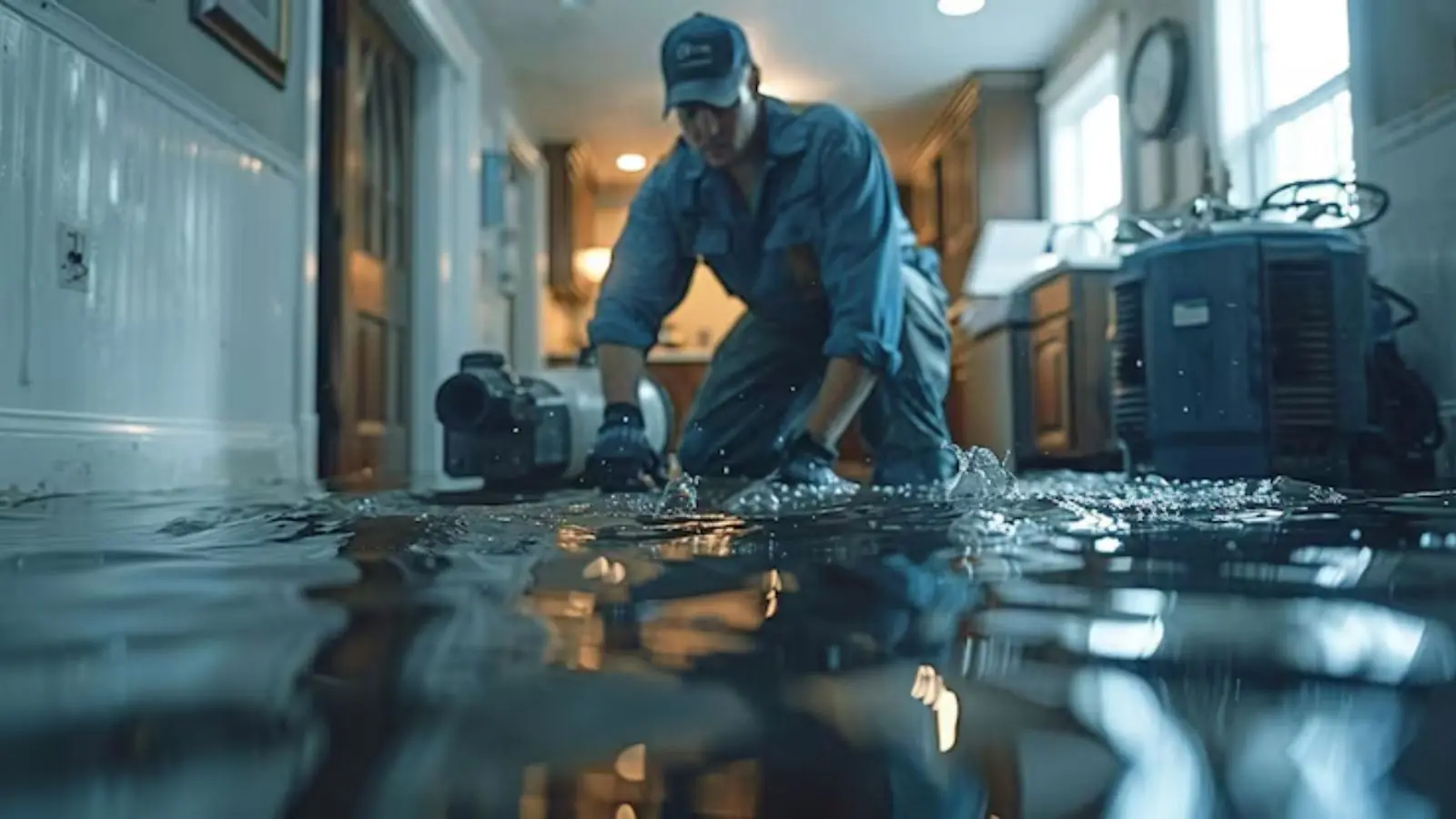
The crew arrives with extraction equipment, moisture meters and drying gear. They find where the water went, which is often further than it looks, pull the soaked pad, extract standing water and set air movers and dehumidifiers. Daily readings show when the structure is dry, and only then does the rebuild start.
Not every call is an emergency. A ceiling stain that has not grown, a musty closet or a question about mold after a leak all get the same careful answer, just without the rush. The dispatcher will say plainly when something can wait for a planned visit and when it cannot.
How scope and price are handled
Price follows scope, and scope follows what the moisture readings show. That is why nobody can responsibly quote a restoration job from a one-line description. The dispatcher explains the factors that drive the number, such as the water category, how much area is affected, which materials are involved and how many days of drying equipment the structure needs.
Before work starts, the scope is explained in plain words and you decide whether to go ahead. If the job grows because hidden damage turns up behind a wall, you hear about it before the extra work begins, not on the final bill.
Where the work happens
Most calls come from Lynnwood neighborhoods such as Cedar Valley, the Scriber Lake area and the streets around Alderwood Mall, plus nearby towns. Each nearby town has its own page that lists the ZIP codes covered, so you can see whether your address is in range before you call: Edmonds, Mountlake Terrace, Mukilteo, Bothell and Everett.
To reach the office, see the contact page.