
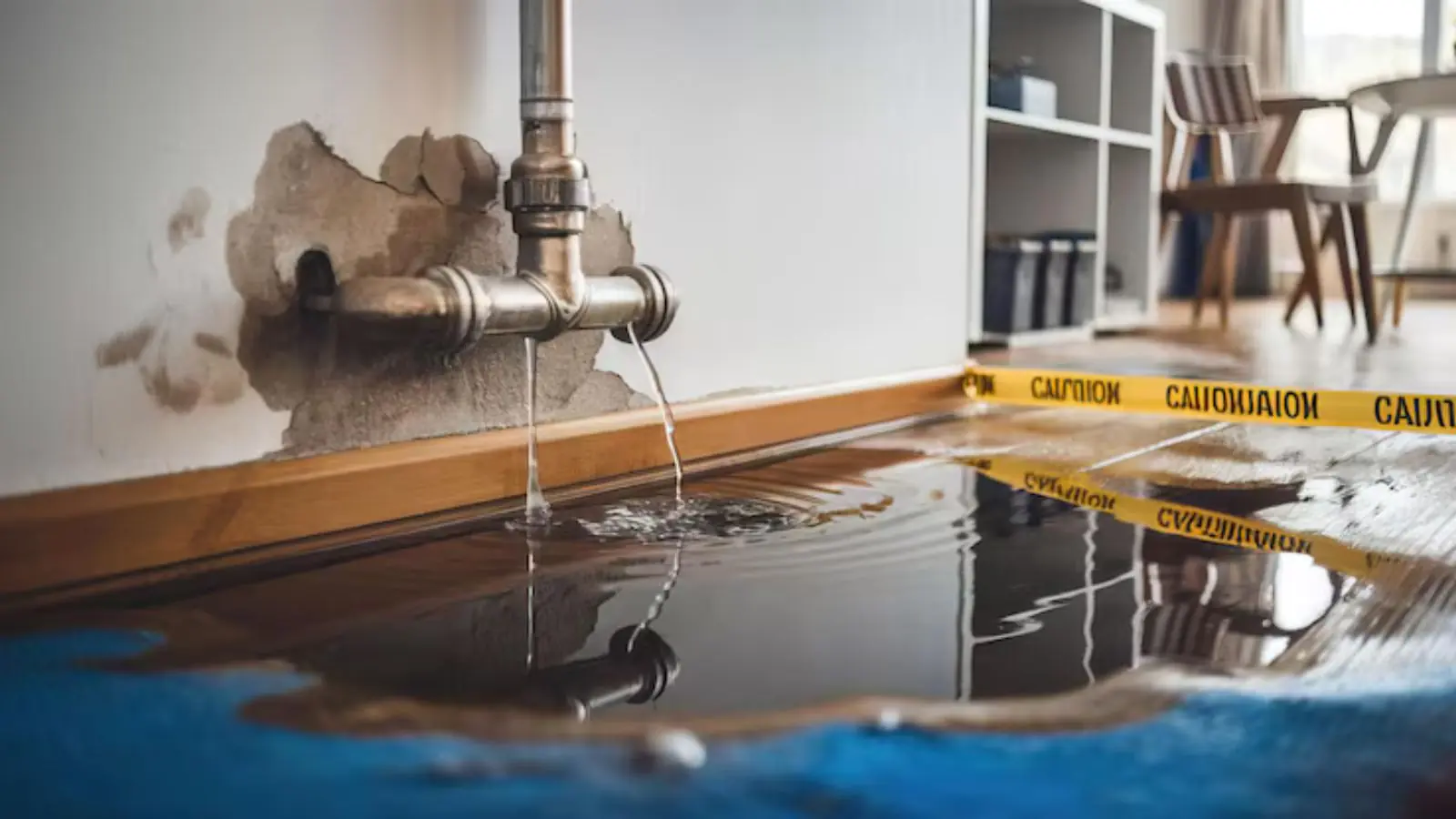
Water is moving through your house right now, so the clock matters more than the paperwork. The 24/7 line takes mitigation calls at any hour. While you wait, stop the source, shut off the main water valve, cut power to wet areas only if the panel is dry and you can reach it safely, lift valuables off the floor and keep people and pets out of any contaminated water.
Water mitigation in Lynnwood, WA is the work of the first 24 to 72 hours. Crews extract water, remove what cannot be saved and start structural drying before swelling, staining and mold take hold.
My Wall Is Wet and I Do Not Know What to Call This
Most people reach this page by describing what they see: a wet wall, a soaked carpet, a damp smell, water dripping from a light fixture or a floor that feels spongy. None of those words is a trade name, and they do not need to be.
The trade calls the work water mitigation. It means limiting the damage that has already happened, and it is separate from rebuilding, which is called water damage repair. If you can name the source and the rooms involved, you can ask for mitigation by name and be understood.
Here is how common symptoms translate into mitigation tasks.
- Wet wall or baseboard: moisture mapping, then drying the wall cavity, sometimes with small openings cut in the drywall.
- Soaked carpet and pad: extraction, then pad removal and drying of the floor beneath.
- Ceiling stain or drip: locating the source, opening the ceiling where it holds water and drying the space above.
- Water under flooring: pulling a few boards or planks so air can reach the subfloor.
- Crawl space with standing water: extraction first, then drying of joists and subfloor from below.
Why Waiting Until Tomorrow Costs More
Water does not stay where it landed. Drywall wicks it upward, insulation soaks it up and wood floors pull it into the boards. Within a day, baseboards swell, and paint blisters.
Mold can start to grow on damp materials within a day or two, which is why the 24 to 72 hour window gets so much attention. Mold needs moisture, so removing the moisture quickly is the best way to avoid needing mold remediation later.
A wet house that is dried promptly often needs only spot repairs. The same house left alone for a week can need whole walls and floors replaced.
Water still spreading? The emergency line is open around the clock.
☎ Call (425) 592-3399Structural Drying
Structural drying pulls moisture out of the building itself, not just the air. It is run as a system, with each piece of equipment doing a different job.
Air movers push dry air across wet surfaces to speed evaporation. LGR dehumidifiers, which stands for low grain refrigerant, then pull the evaporated water out of the air so it does not settle back into the walls. Moisture meters read how wet the drywall, framing and flooring are, and thermal imaging cameras show cool, wet areas inside walls that you cannot see.
Drying usually runs about three to five days, though thick framing and hardwood take longer. The crew visits daily, moves equipment as areas dry and records new readings each time.
What counts as dry is set by comparing wet areas against readings from unaffected parts of the same house, following the published ANSI/IICRC S500 standard. Equipment comes out only when the meters agree.
Water Categories and Drying Classes
Two labels shape the plan. The category describes how contaminated the water is. The class describes how much water the materials took on and how fast they will dry. Both come from the published ANSI/IICRC S500 standard.
| Label | What it means | Effect on the job |
|---|---|---|
| Category 1 | Clean water from a supply line or tap | Most materials can be dried in place. |
| Category 2 | Used water from a washer or dishwasher drain | Porous materials like pad are usually removed and surfaces cleaned. |
| Category 3 | Sewage or rising surface water | Containment goes up and porous materials come out. |
| Class 1 and 2 | Small to moderate area with some carpet or wall wicking | Standard air mover and dehumidifier setup. |
| Class 3 | Water from above that soaked ceilings, walls and insulation | More openings and more airflow from top to bottom. |
| Class 4 | Deep moisture in dense materials like hardwood or plaster | Longer drying with specialty drying equipment. |
What a Mitigation Visit Looks Like
Every visit follows a few steps, whatever the size of the loss.
Find the source
The crew confirms the water is off and finds where it came from, whether a supply line, a drain or a roof.
Map the moisture
Moisture meters and thermal imaging cameras show how far the water traveled, including inside walls.
Extract and remove
Standing water is pulled out. Wet pad, soaked insulation and swollen trim are removed so the rest can dry.
Set equipment and monitor
Air movers and LGR dehumidifiers go in, and the crew rechecks readings on later visits.
Mitigation in Lynnwood Homes
The median home in Lynnwood was built in 1979, per the 2023 American Community Survey, and about half of the city's units predate 1980. That means original plumbing and older water heaters are common sources. We take mitigation calls across 98036, 98037 and 98087, whether the loss is a single room or an entire floor.
Near the Scriber Creek corridor between 188th and 196th Street SW, the city's own flooding report documents repeated surface flooding. Garages and crawl spaces there may take in groundwater, and the water is often not clean. If you are close to that area, check the FEMA flood map for your address.
Next door, Mountlake Terrace has its own page for water losses in that city.
Before You Call: Electrical, Gas and Sewage Safety
Some situations are not safe for homeowners, and they come before the restoration line.
Stay out and call the utility or 911 first
If water touches outlets, a panel, a gas appliance or any wiring, stay out of it. Call your electric or gas utility, or 911 for any electrical or gas risk, before calling the restoration line. If you smell gas, leave the house.
If sewage is involved, keep everyone out of the water, including pets, and wait for a crew with protective gear.
What Sets the Price and How Insurance Fits
Mitigation cost follows the water category, the size of the affected area, the materials, the number of drying days and the amount of equipment. A single wet bathroom is a small job and a whole floor of wet carpet and drywall is a large one.
Scope and price are explained before work starts, along with what could change them. For a real number on your house, call the 24/7 line.
Sudden and accidental water damage is often covered, while gradual leaks and flood damage often are not. Many policies expect you to take reasonable steps to limit further damage, so check your policy and ask your insurer. Crews record photos, readings and a written scope for your own claim.
What Comes After Mitigation
Once the structure reads dry, repair can begin. Used or contaminated water calls for water damage cleanup during the first visit. If mold has already grown by the time you call, mold remediation is the next conversation.
Questions about this service
Do you handle water mitigation emergencies at night or on weekends in Lynnwood?
Yes. The line is open 24/7, including nights, weekends and holidays, and same-day response is offered when a crew is available. We do not promise a specific arrival time.
While you wait, shut off the main water valve and lift valuables off wet floors.
Can I rent air movers and dehumidifiers and dry it myself?
We do not offer equipment rentals. Air movers push air across wet surfaces and LGR dehumidifiers pull the moisture out of the air, but results depend on where they are placed and when they are moved.
The crew runs the equipment so readings can be checked daily and the drying finished on schedule.
My carpet feels squishy after a pipe burst. Is it too late?
Probably not, if you call soon. Clean-water carpet is often dried in place, though the pad underneath is commonly removed.
The longer it sits, the more likely both need replacing.
How long does structural drying take?
Most jobs run about three to five days, with daily visits to check readings. Hardwood, thick framing and larger losses take longer.
Equipment comes out when the moisture meters match the dry goal.
When do you explain the price?
Before work starts. The crew describes what will be done in each room, what drives the number and what could change it as walls are opened.
For a real number on your house, call the 24/7 line.
Is mitigation the same as repair?
No. Mitigation stops the spread and dries the structure. Repair rebuilds drywall, flooring and paint afterward.
Doing them in order keeps the rebuild from trapping moisture.
Do I need to wait for my insurer before drying starts?
Check your policy and ask your insurer, because many policies expect you to limit further damage. Photograph everything before anything is moved.
Our crews record photos, readings and a scope you can hand to your insurer.