
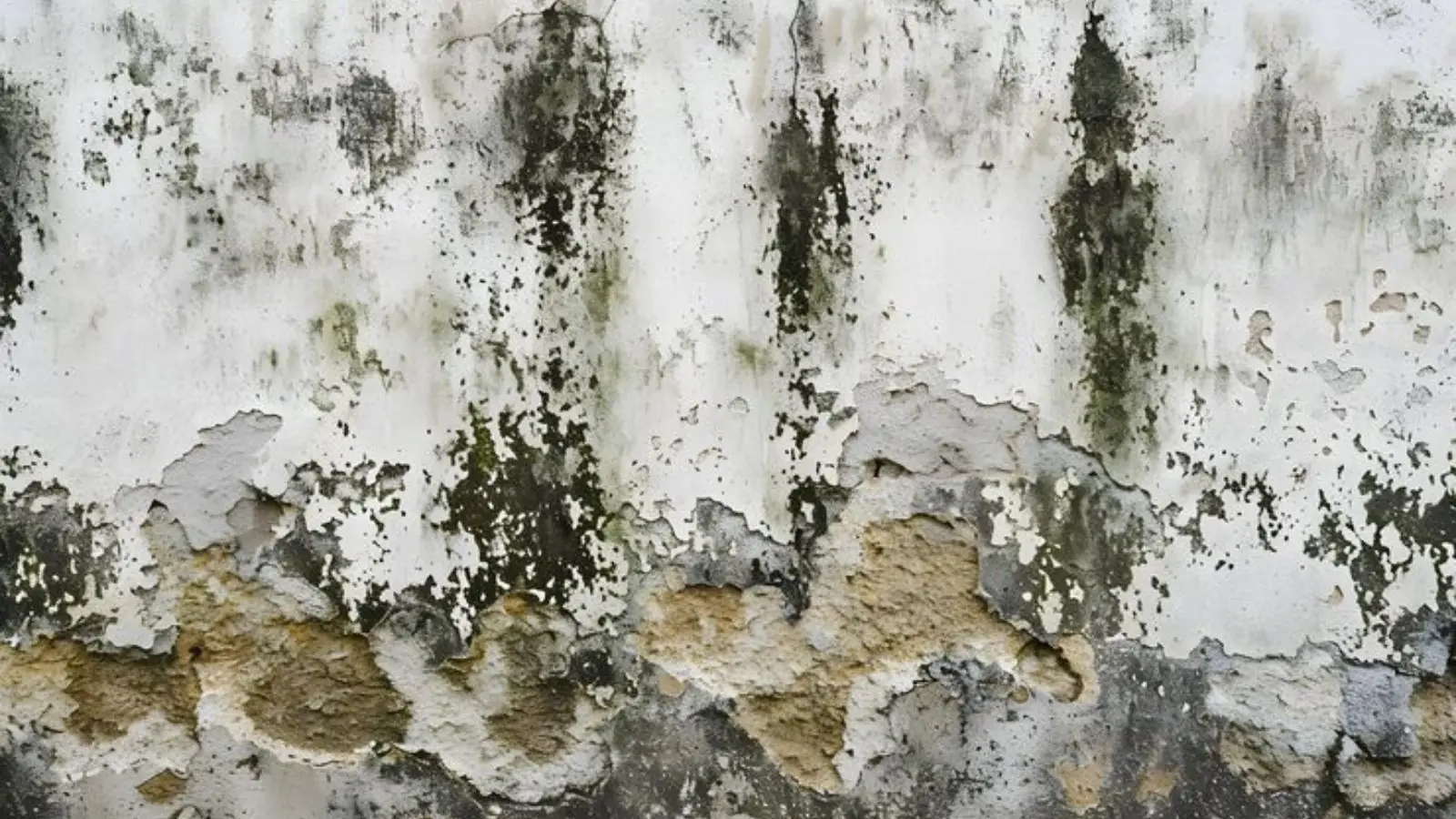
People who ask what black mold looks like in Lynnwood, WA usually found a dark patch on a wall, a ceiling or the edge of a window. The honest answer is that appearance gives clues but rarely gives a name.
This guide describes the colors, textures and locations that show up most, the common look-alikes, and the testing options available when you need more than a guess.
The short answer: it varies, and color is a weak clue
Mold growth ranges from white and gray to green, brown and black, and one patch can show several shades at once. Age, the material underneath and the amount of moisture all change the look. A dark patch is not proof of any particular type, and a light patch is not proof of a mild one.
Because of that, nobody can responsibly name a type by eye. What you can do is describe what you see, note where it sits, and find the moisture feeding it.
Textures that show up most often
Speckled or dotted
Many tiny dark dots clustered together, like pepper sprinkled on a surface. This is common on painted drywall, grout lines and window sills.
Fuzzy or velvety
A soft, raised surface that looks like fine fur. It may appear gray, white, green or dark, and it tends to show where moisture has stayed for a while.
Smeared or patchy
Irregular blotches with soft edges that spread outward from a damp spot. These often follow the path of moisture down a wall.
Slimy or damp-looking
A glossy film on a surface that stays wet, such as the underside of a sink cabinet or the base of a shower wall.
Powdery
A dusty look that wipes off as fine particles. This can also be efflorescence, a mineral deposit, which is one of the look-alikes covered below.
Water still spreading? The emergency line is open around the clock.
☎ Call (425) 592-3399Where it tends to appear in a house
Look at corners, behind furniture on exterior walls, around window frames and under sinks. Check the ceiling around bathroom fans, the walls near a laundry area and the floor line of a basement or crawl space. Growth likes still air and surfaces that stay cool.
Hidden spots matter too. Mold can grow on the back of drywall, inside wall cavities and on the underside of subfloors, and the visible patch may be the smaller part of it. A musty smell with no visible growth is a reason to look for a moisture source.
Look-alikes: what dark spots can really be
| Look-alike | What it looks like | Clue that it is not mold |
|---|---|---|
| Dirt and dust | Gray or tan film, often along edges and vents | Wipes away dry and does not return in the same shape |
| Soot from candles or a smoky stove | Black smudges above a heat source or outlet | Pattern follows the source and the surface stays dry |
| Water stain | Tan or brown ring, no raised texture | Clean edges, dry to the touch, no growth in the center |
| Efflorescence | White crystals or powder on masonry | Dissolves in water, and a basement concrete wall is a typical spot |
| Dark pigment or old paint | Even color change with no texture | Stays identical in all light and has no musty smell |
| Actual mold | Irregular patch, often damp area, may smell musty | Tied to a moisture source and spreads when conditions stay wet |
The last row is the one that matters. If a spot sits next to moisture and keeps changing, treat it as growth until someone shows otherwise.
Testing options when you need more than a guess
There are three practical routes. A visual inspection with a moisture meter and thermal imaging camera finds the source and the extent of damp material. Surface tape lifts and swabs can be sent to a lab to identify what is growing. Air samples compare indoor spores with an outdoor baseline.
Each has limits. Samples show what was collected on one day in one spot, so results depend heavily on where and how they are taken. Testing and remediation follow the ANSI/IICRC S520 standard as a published guide, and it is reasonable to ask a company how it uses it. Testing tells you what is present, but it does not fix the damp wall.
Whether a type is present rarely changes the plan, because the plan is the same: stop the water, contain the area and remove affected material. Questions about health effects belong to a physician. If a sale or lender needs paperwork, ask a mold remediation crew what documentation it provides.
What to do with what you see
Take photos with a ruler or coin beside the patch for scale, and note the date. Do not disturb the area. Dry brushing or scraping lifts material into the air and can make a small problem larger.
If the growth follows a recent leak, drying comes before cleaning, and water mitigation is the step that removes moisture from the structure. Ask whether your state licenses mold work before you hire anyone.
Lynnwood note: homes near Scriber Creek and the flooding record
The City of Lynnwood's Scriber Creek flooding summary (final report, July 2014) says flooding was concentrated between 188th St SW and 196th St SW. It documents events in 2006 near 190th St SW and 55th Ave W, December 2007 at the Casa Del Rey access road, and November 2012 near 55th Ave W and 189th St SW.
The same report says repeated flooding had gone on for about 20 years, and it names undersized culverts and a confined channel among the causes. If your home or business sits in that corridor, lower walls, baseboards and slab edges deserve a closer look after any wet season, since dark staining low on a wall may be old moisture rather than new growth.
The report does not map every address, so check the FEMA flood map for your property and ask the City about drainage near you. Owners in Mukilteo and Everett can use the same low-wall check.
Questions we hear
Is all black-looking mold the same type?
No. Color does not map to type, and many different molds can look dark. Only a lab can identify what a sample contains.
For the practical decision, what matters more is how large the area is and whether moisture is still present.
Can I test for mold with a kit from a hardware store?
Kits can show that spores exist, but spores are found in nearly every home, so a positive result alone says little. Results also depend on how the sample was taken.
A moisture reading and an inspection usually give more useful direction. Ask a company which sampling steps it recommends.
Does a musty smell mean there is mold?
It can point to hidden moisture, and growth is one possible cause. Smell alone does not confirm it, and it does not rule it out.
Check under sinks, around the water heater and along exterior walls. If the odor lingers, call and describe where it is strongest.
My basement wall has white powder. Is that mold?
It may be efflorescence, a mineral deposit left when water moves through masonry. It dissolves when you add water, which mold does not.
Efflorescence still tells you water is moving through the wall, so find where it comes from.
Have a question the answers above did not cover? Call the line and ask.
☎ Call (425) 592-3399