
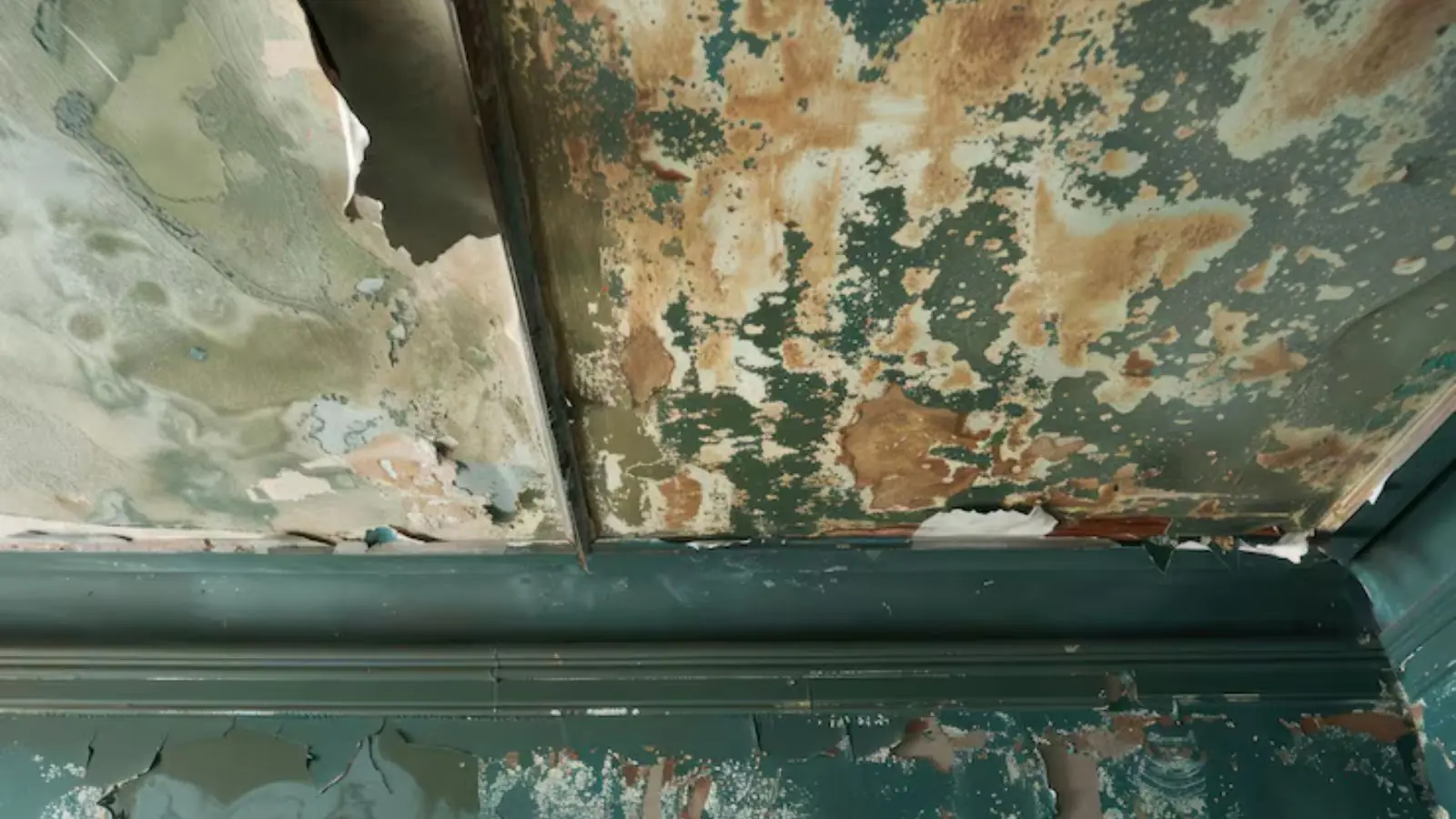
Most people see water damage on a wall as a brown stain or a patch of peeling paint. The stain is only the top layer of a wall system that includes framing, insulation and often wiring.
Wall repair in Lynnwood, WA goes best when each trade works in the right order. This post covers how to read the signs, what gets checked inside the cavity, and who does what from the first leak fix to the final coat of paint.
Reading the wall before anyone touches it
The surface tells you where to look, but not how much is wet. Four signs show up most often.
Write down what you see before anything is cleaned or cut. A dated photo of the stain edge, the baseboard gap and any musty smell gives the crew a starting point and gives you a record if you later open an insurance claim.
Staining
A tan or brown ring with a darker edge usually marks where water stopped spreading. Rings that grow after the leak was fixed mean moisture is still present.
Bubbling or peeling paint
Water gets under the paint film and pushes it off the board. The board underneath may be firm, soft or only damp, and only a meter can say which.
Swollen baseboards
Baseboard soaks up water from the floor side and the wall side. Gaps at the top edge or cracked paint along the bottom are clues that water sat at the base of the wall.
Soft spots and musty smell
A spot that gives under a light press means the board has lost strength. A musty smell without a visible stain often points to a wet cavity.
What sits inside the cavity
A typical exterior wall has paint, drywall, studs, insulation, sheathing and siding. An interior wall has fewer layers but often carries wiring and a bottom plate that sits on the subfloor.
A cavity check uses three tools. A pin or pinless moisture meter reads moisture in the board and wood. A thermal imaging camera shows cooler patches that often mean evaporation, which helps point to where water traveled. Small inspection holes, usually the size of a coin, let a probe or a camera look inside without opening the whole wall.
The camera shows temperature, not water, so a crew confirms every suspect area with a meter. That step separates a careful assessment from a guess. If your water mitigation crew skips it, ask why.
The repair sequence, trade by trade
Order matters because each stage depends on the last. Repairing before the source is fixed is the most expensive mistake, and painting before drying is a close second.
| Stage | Usual trade | Done when |
|---|---|---|
| 1. Stop the source | Plumber, roofer or siding contractor | The leak is found, fixed and tested. |
| 2. Dry the wall | Restoration crew | Meters match a dry reference wall. |
| 3. Remove damaged material | Restoration crew | Wet board and insulation are out, framing is exposed. |
| 4. Repair wiring or plumbing if needed | Electrician or plumber | Work is done and any needed inspection is arranged. |
| 5. Insulate and close | Insulation installer, drywall crew | Framing reads dry before the wall is closed. |
| 6. Tape, finish and texture | Drywall finisher | Three coats are applied, sanded and matched. |
| 7. Prime, paint, trim | Painter, trim carpenter | Stain-blocking primer, full-wall paint, baseboards back on. |
On a small job one contractor may cover several stages. On a larger one, expect a handoff, and ask who is responsible for the dry readings before the wall is closed.
Water still spreading? The emergency line is open around the clock.
☎ Call (425) 592-3399Baseboards and trim
Baseboard is easy to ignore, but it often hides the worst of the wetting. Water wicks into the bottom plate and the drywall behind the trim. Pulling the board lets air in and lets the crew see the lowest edge of the damage.
Trim made of pine, finger-jointed pieces or composite is usually replaced once it swells. Solid hardwood trim can sometimes be dried and reused. Number each piece with painter's tape before removal so it goes back in the same order.
Flooring meets the wall at the baseboard, so the two repairs are linked. If hardwood or laminate along that wall also got wet, plan the floor work and the trim work together. Setting new baseboard on a floor that is still drying leaves gaps once the wood settles.
Paint, primers and why the stain comes last
Stains from water contain tannins and mineral deposits that bleed through ordinary paint. A stain-blocking primer seals them, and two coats of finish paint on top of it cover the repair.
Paint applied too early has a second problem. If the wall still holds moisture, the film blisters within days and the cavity gets sealed in again. That is why the dry reading comes first and the primer comes last in the sequence.
Painting a whole wall corner to corner hides the repair better than a spot job, because old paint has faded and a new square of color stays visible.
Scheduling the trades without losing a week
Gaps between trades are where jobs stall. Drywall finishing needs several days for coats to dry. Paint needs a day between coats. Flooring waits for the walls to be done.
Ask each contractor for a start window and what they need from the one before. A restoration crew can usually tell you how many days of drying to expect, which lets the finisher book accordingly.
Water from a failed pipe in the wall may mean the plumber has to open more wall than the stain suggests. Plan on the repair area being larger than the visible damage, and on one extra day for the drying readings before the wall is closed.
Exterior walls versus interior walls
An interior wall usually gets wet from a plumbing leak, an overflowing fixture or water running down from above. The damage tends to stay near the source and dries quickly once the board is open.
An exterior wall adds sheathing, house wrap and siding to the mix, and water can enter from the roof, a window flashing or a failed seal as easily as from a pipe. Drying takes longer because those layers hold water, and the crew may need to open the wall from the inside to reach all of it.
The same order applies to a house in Mukilteo or Edmonds. A source check and a moisture map come before any cutting, whatever the town.
Wiring and plumbing inside the wall are the other variable. A wet outlet box means the circuit should stay off until an electrician has looked at it. A pinhole leak in a copper line may need the plumber to open more wall than the stain suggests.
Where DIY ends and a pro is the safer call
A small patch of clean-water staining on an interior wall, with a leak already fixed and readings confirmed dry, is a reasonable weekend project. Many other cases are not.
Call a pro for sewage or other Category 3 water, any wall with outlets or switches inside the wet zone, a wall that may be load-bearing, large areas, and any wall with signs of mold. Wall mold is a job for mold remediation crews working to the ANSI/IICRC S520 standard, and health questions belong to a physician.
Structural questions need a qualified person to look. Do not cut into a wall that carries a beam or roof load without that advice.
Lynnwood note: know who serves your water line
The City's 2012 water system plan, published by Public Works, says the Alderwood Water & Wastewater District wholesales water to the City and also serves some connections directly inside city limits. It lists 479 direct AWWD connections east of 36th Ave W and north of 180th Place SW, and east of Hazel Road and south of I-5. Figures from a 2012 plan may be dated.
That matters when a supply line in a wall leaks. The City's utility bill page says the City bill covers water and sewer, so your bill shows who supplies you. Know that name and where your meter sits before an emergency, so the right utility gets the call.
A crew will close the main valve inside the house if it works. A stuck valve or a leak at the meter is a utility conversation, not a wall repair one.
Questions we hear
Which water utility do I call about a leak at my meter in Lynnwood?
Check your water bill. The City of Lynnwood bills water and sewer for most of the city, and the Alderwood Water & Wastewater District serves some addresses inside city limits directly, according to the City's own 2012 water plan.
If your bill does not settle it, the City's Do I Live in Lynnwood map confirms whether the address is inside city limits.
Can I repair the wall myself after a small pipe leak?
If the water was clean, the area is small and the readings are dry, yes. Cut back to dry, solid board, patch, prime and paint.
If the leak ran inside the wall for days, if wiring is exposed, or if anything smells musty, call a crew first.
Why does the stain come back after I painted?
Usually because the wall is still damp or the stain was never sealed. Dry the wall, then use a stain-blocking primer before the finish coat. A new stain after that points to a source still leaking.
Do I have to open the whole wall to check it?
No. Crews use meters and a thermal camera first, then open small inspection holes. A bigger cut happens only where readings show wet material.
Have a question the answers above did not cover? Call the line and ask.
☎ Call (425) 592-3399