
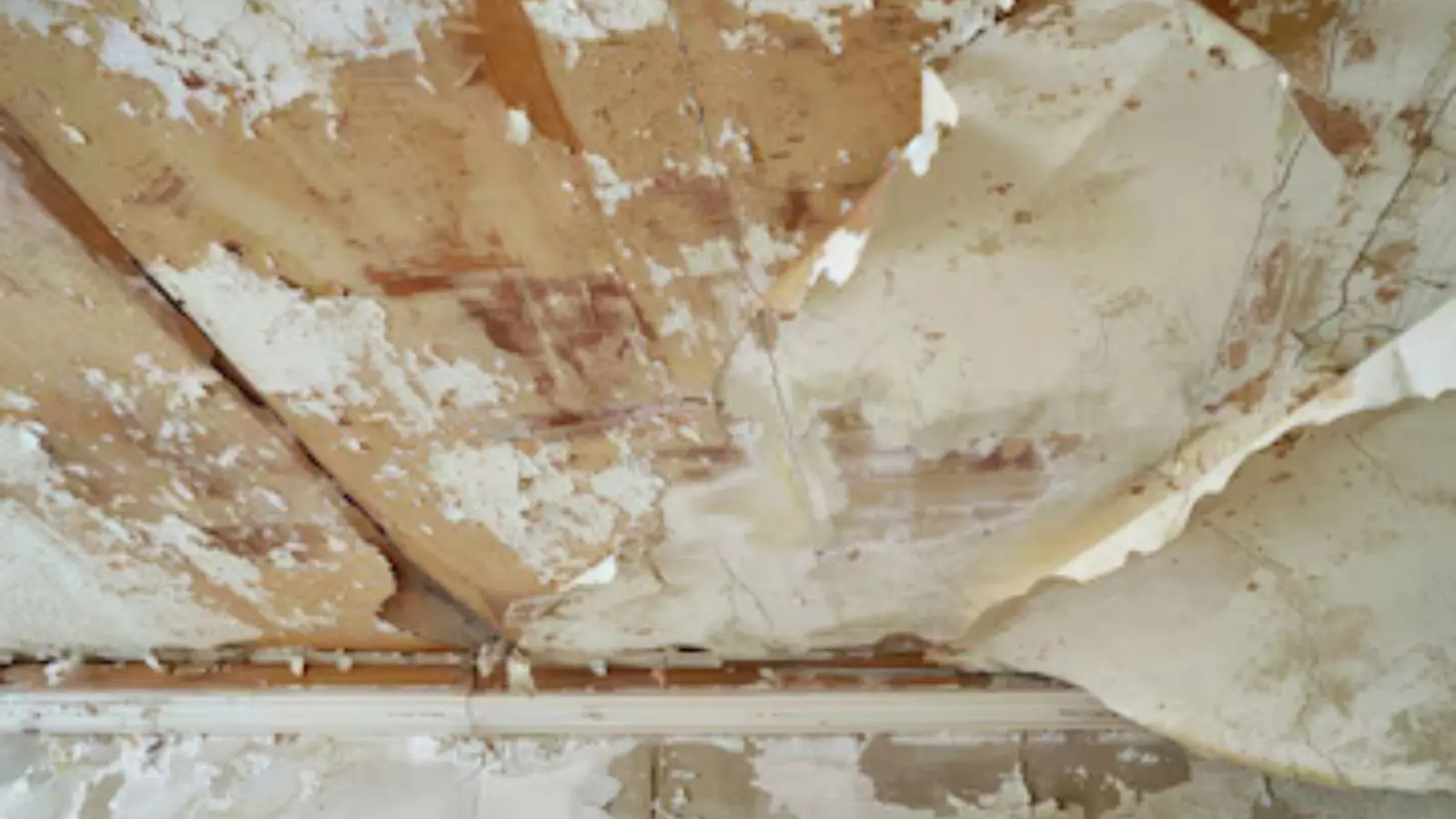
The signs of water damage in Lynnwood, WA homes are often quiet. A faint ceiling ring, a floor that feels slightly soft, or a smell in a closet can be the only hint that water has been moving through a wall for weeks.
Catching it early keeps a drying job small. Below you will find the visual signs, the less obvious clues, a symptom-to-cause table, and a checklist you can run through once a month.
What you can see: stains, paint, and wallpaper
Brown or yellow rings on a ceiling are the classic sign. They grow outward in rings as the area dries and gets wet again, so a stain with several edges tells you water has returned more than once.
Paint that bubbles, peels, or looks blistered is another sign, because moisture behind it pushes the film off. Drywall that looks slightly wavy, has dark seams, or feels cool and damp to the hand is holding water. Press gently near a baseboard. Soft, crumbly drywall is already damaged.
What you can smell, hear, and feel
A musty or earthy smell in a room that has no obvious source is worth chasing. Mold needs moisture to grow, so a persistent odor often means a damp spot somewhere in the wall, floor, or crawl space. A smell alone does not tell you what is growing, and any health question belongs with a physician.
Listen for a faint hiss or a drip inside a wall when every tap is off. Feel the floor too, since a section that is warmer, cooler, or softer than the rest may be sitting on wet subfloor.
Floors that warp, cup, or lift
Hardwood that cups, with the edges higher than the centers, has absorbed moisture from below. Boards that buckle and lift off the subfloor have taken on more. Laminate that swells at the seams or feels spongy under foot has water in its core.
Tile floors give clues too. Cracked grout, loose tiles, or a hollow sound when you tap one can mean water has loosened the bed under it. Do not wait for the whole floor to move, because the first few boards are the warning.
Water still spreading? The emergency line is open around the clock.
☎ Call (425) 592-3399Symptom-to-cause table
Match what you see to the likely source. The table lists common pairings, though only a moisture meter and a look inside the wall can confirm one.
| What you notice | Often points to | Where to look next |
|---|---|---|
| Ring stain on a ceiling | Leak from the floor above, roof, or a vent boot | Bathroom above, attic, roof penetrations |
| Bubbling paint on a lower wall | Moisture rising or leaking inside the wall | Behind the toilet, under windows |
| Cupped hardwood | Moisture from below or a nearby leak | Crawl space, dishwasher, sink base |
| Musty smell in a closet | Damp wall or humid air trapped | Exterior wall, water heater closet |
| Dark spots under a sink | Slow supply or drain leak | Shutoff valves and drain fittings |
| Soft spot on a bathroom floor | Tub, toilet seal, or shower pan leak | Around the tub and toilet base |
If two or more symptoms point to the same area, call before opening the wall yourself.
Where to look in older homes
Older houses hide water in predictable places. Check the cabinet under each sink, the area behind and under the toilet, around the washing machine hoses, and beneath the water heater. Look at the ceiling below any bathroom and along the walls under windows.
Attics and crawl spaces matter too. Shine a light at roof penetrations, around vents, and on plumbing runs for stains or dripping. If you find standing water in a crawl space, treat it as active and call for help. Stay away from wet wiring and any electrical panel that is damp.
Your water bill as a clue, not a diagnosis
A bill that jumps with no change in habits can hint at a hidden leak, such as a running toilet or a line failing underground. To check, read your meter, turn off every fixture for a short time, and see whether the dial still moves.
A high bill alone does not prove damage, and a normal bill does not rule it out, since a slow leak into a wall may be small. Use the bill to prompt a closer look, not as the only test.
A monthly checklist
- Look under every sink for dampness, rust on fittings, or warped cabinet floors.
- Check ceilings and the upper corners of walls for new stains or paint changes.
- Inspect the washing machine hoses and the water heater base.
- Press on floors near tubs, toilets, and dishwashers for soft spots.
- Scan attic and crawl space for stains or drips after heavy rain.
- Note any new musty smell and where it is strongest.
Write the date you spotted a sign and photograph it. Small records help later if the damage grows.
When to call
Call when a stain grows, a smell returns after cleaning, or a floor starts to move. Early water mitigation uses moisture meters and thermal imaging cameras to find the wet area and dry it before rebuilding is needed. If walls or floors are already damaged, water damage cleanup removes the wet materials. Crews also serve Mountlake Terrace and Everett.
Lynnwood note: half the housing stock predates 1980
The Census American Community Survey (2023 five-year estimates) shows that about 9,000 of Lynnwood's 17,617 housing units were built before 1980, and the 1960s are the largest single group at 4,038 units. Median year built is 1979. Older pipes, water heaters, and supply lines are more likely to be near the end of their life, so the monthly checklist is worth the time in these homes.
Your bill source also matters when you use the water bill as a clue. The City's utility billing page says its bill covers water and sewer. The City's 2012 water plan also notes that some addresses inside the city are direct customers of the Alderwood Water & Wastewater District. Check which one sends your bill so you know whom to call about the meter.
Questions we hear
Which utility do I contact about my water meter in Lynnwood?
The City of Lynnwood's utility bill covers water and sewer, but its 2012 water plan notes some addresses inside the city are billed directly by the Alderwood Water & Wastewater District. That plan may be dated.
Look at your bill. The name at the top tells you who to call about the meter and any unusual usage.
Can I tell if mold is growing by looking at a stain?
No. A stain only shows moisture has been there. Only testing by a qualified professional tells you what is growing, and remediation follows the ANSI/IICRC S520 standard.
Fix the leak first, then dry the area. Take health questions to a physician.
A ceiling stain looks old. Do I still need to act?
Yes, at least to check it. An old stain may be dry, or it may be wet every time it rains or someone showers.
Press it, look above it, and photograph it. A moisture meter reading tells you if it is active.
My floor feels fine, but there is a musty smell. What now?
The water may be inside a wall or under the floor, where you cannot see it. Look near plumbing walls, exterior walls, and low corners.
Call the 24/7 line if the smell persists. Crews use moisture meters and thermal cameras to find hidden wet spots.
Have a question the answers above did not cover? Call the line and ask.
☎ Call (425) 592-3399