
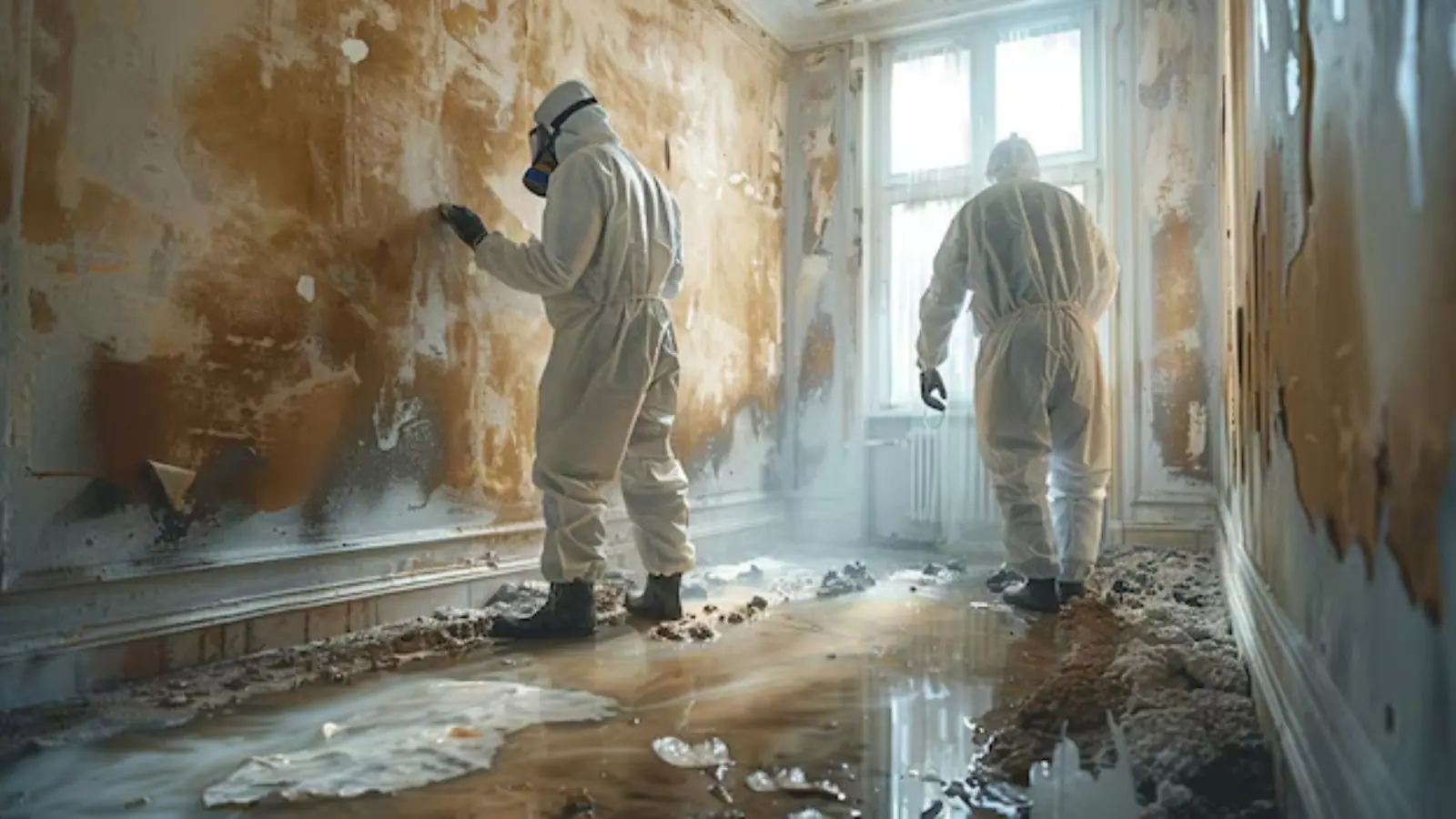
Hiring a mold removal service in Lynnwood, WA is easier when you know what the work should include. The visible patch is rarely the whole job, and the order of steps matters as much as the cleaning itself.
This guide walks through the process from first visit to final check, the questions worth asking before you agree to anything, what drives cost, and what to expect if a sale or lender is involved.
What a professional job covers, in order
Find and stop the moisture
A crew uses a moisture meter and a thermal imaging camera to trace damp material back to its source. If a pipe, roof or drain is still leaking, a plumber or roofer fixes that first, because removal without a dry structure sets up a repeat.
Write the scope
The crew documents what it found with photos and readings, lists the affected materials and explains the plan and price before work starts.
Contain the work area
Plastic sheeting and tape seal the room, and a negative air machine keeps air moving out through a filter instead of into the rest of the house.
Remove affected material
Wet or growth-covered drywall, insulation and trim are cut out, bagged and carried out. Wood framing is cleaned with HEPA vacuums and damp wiping, and sanded or wire-brushed only under containment.
Filter the air
HEPA air scrubbers run throughout the work to capture airborne particles, and are kept on until cleanup is finished.
Dry and verify
Air movers and LGR dehumidifiers dry the framing until meter readings match unaffected areas. Only then does the rebuild begin.
How to choose a company: questions worth asking
You can learn a lot in a five-minute phone call. Ask each company the same questions and compare the answers side by side.
| Ask this | A solid answer includes | A weak answer sounds like |
|---|---|---|
| Do your crews work to ANSI/IICRC S520? | Names the standard and explains how it shapes containment and clearance | Vague talk about experience with no standard named |
| Is the company licensed and insured? | Yes, plus a willingness to send proof on request | Hesitation or a refusal to share |
| Does your state license mold work? | A direct answer, or a suggestion to check the state's own sources | A confident claim with no source |
| What will I receive in writing? | A scope, photos, moisture readings and a clear price breakdown | A single total with no detail |
| Will you find the water source? | Yes, with a plan for who fixes it | They only talk about cleaning |
| Do you separate testing from removal? | Explains why independent testing can be useful | Pushes both services together without explanation |
Be cautious with anyone who promises that mold will never return. No honest company can promise a permanent result, since new moisture can create new growth.
What drives the cost, in words
Price is built from a handful of factors, and a fair estimate shows how each one applies to your house. These are the common ones:
- Size of the affected area and how many rooms the containment must cover
- Materials involved, since drywall comes out more easily than plaster, framing or flooring
- Access, such as an attic, crawl space or finished basement
- How long drying equipment must run and how many units are needed
- Whether testing is part of the job and how many samples are taken
- Rebuild work after removal, including drywall, texture, paint and trim
Because every house differs, an honest number needs someone to look. For a real number on your house, call the 24/7 line.
Water still spreading? The emergency line is open around the clock.
☎ Call (425) 592-3399Clearance testing and what it means
Clearance is a check after the work to confirm the area is dry, clean and ready to rebuild. It may include a visual review, moisture readings and, in some cases, sampling compared with an outdoor baseline. S520 describes the process as a published standard.
Many people prefer that the party doing the clearance check be separate from the crew that did the removal. That gives you a second set of eyes and a cleaner paper trail. Ask each company whether it supports independent testing and what documents it hands over at the end.
Selling a home, or a lender asks for proof
Buyers and lenders ask for paperwork more often than for promises. The documents that help most are the written scope, before and after photos, moisture readings, any lab results and a clearance report if one was done. Keep them together in one folder.
If an inspection report flagged growth, call before the closing date gets close. Drying and removal take days, and rebuilding takes longer, so schedule pressure builds fast. A company can often explain what it would need to see first, and you can read about the work on the mold remediation page. Once the ceiling or wall is open and dry, water damage repair covers putting it back together.
Lynnwood note: permits, renters and who needs the paperwork
The City's Development & Business Services department reviews building plans and issues permits, and its Permit Center is at City Hall, 19100 44th Ave W. If removal means opening walls and rebuilding, ask the department whether your project needs a permit rather than assuming it does or does not. Your contractor should be able to tell you what they plan to do.
The Census Bureau's QuickFacts for 2020 to 2024 shows that 51.1 percent of Lynnwood homes are owner-occupied, so close to half are not. Owners need removal records for resale. Tenants and landlords need a written trail of when a problem was reported and fixed, and neighbors in Edmonds and Bothell face the same split.
Questions we hear
Do I need a permit for mold removal in Lynnwood?
It depends on the scope. Removing a small amount of drywall and replacing it may differ from reframing walls or moving plumbing and wiring.
Ask the city's Development & Business Services department before work begins, and ask your contractor what they will pull.
How long does a typical removal job take?
Setup and removal often take a few days for a small area, and drying adds more. Larger areas take longer, and rebuilding is separate.
A crew can give you a realistic schedule after seeing the moisture readings.
Should the company that removes mold also test it?
It can, but many homeowners prefer an independent party for clearance. A separate tester has no stake in the removal result.
Either way, ask for the report in writing and ask what standard it follows.
What should a written mold scope list?
It should name each room, the materials to be removed, the containment and air filtration planned, the drying steps and the rebuild items that are included or left out.
If a scope is a single line with one total, ask for more detail before you agree.
Will homeowners insurance cover mold removal?
Coverage depends on your policy and on what caused the water. Sudden and accidental damage is often covered, while gradual leaks and neglect often are not.
Check your policy and ask your insurer before work starts.
Have a question the answers above did not cover? Call the line and ask.
☎ Call (425) 592-3399