
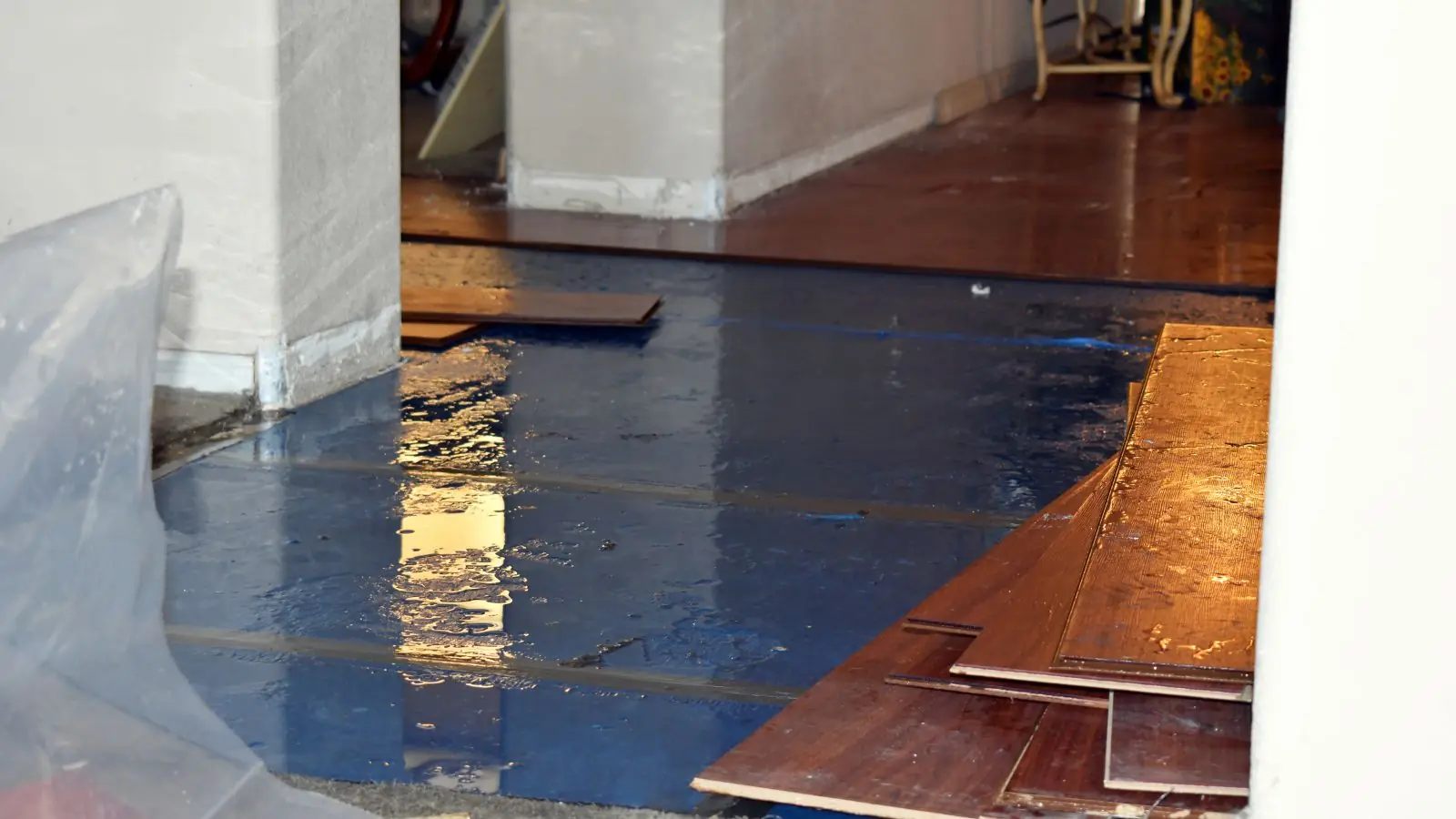
Wood reacts to water in ways that surprise people. A hardwood floor can look fine for a day, then cup at the edges a week later. A damp stud can stay sound for years or start to rot behind a closed wall.
This guide covers water damaged wood in Lynnwood, WA homes by type. It explains how to tell cupping from crowning, when drying beats replacing, and why sanding too early ruins a floor that would have recovered.
Reading the wood: cupping, crowning, buckling and stains
The shape of the damage tells you what happened and when. Four patterns cover most hardwood and engineered floors.
Cupping
The edges of each board rise higher than the center. It means the bottom of the board holds more moisture than the top, usually from water that came up from below or soaked in from a spill.
Crowning
The center of each board rises higher than the edges. It often appears after a cupped floor was sanded while still wet, or when the top surface is wetter than the underside.
Buckling
Whole sections lift off the subfloor. This is a sign of a large water event and usually means the floor needs professional drying or replacement.
Dark stains and soft spots
Black or gray rings that do not sand out point to long-term moisture. Soft wood that gives under a screwdriver tip has started to rot and will not recover.
Dry it or replace it: a decision table
Wood fibers swell when wet and shrink when dry. If the fibers have not broken down and the wood has not been wet long enough to rot, drying often works. Use the table to see where your piece falls.
| Material | Often dried in place when | Replace when |
|---|---|---|
| Solid hardwood floor | Water was clean, the floor was caught within days, and boards are not buckled. | Boards lifted off the subfloor, finish is stained black, or the floor sat in dirty water. |
| Engineered hardwood | Moisture is limited to the surface layer and the core has not delaminated. | Layers separate or the edges swell and stay swollen. |
| Plywood or OSB subfloor | Surface wet, clean water, and readings come down. | Soft, delaminating or visibly stained from long exposure. |
| Floor joists and studs | Wood is firm and moisture falls to a normal level. | Rot is present, wood is soft or cracked, or a structural question remains. |
| Painted trim and baseboard | Solid wood trim that is firm and not stained through. | Finger-joint, composite or MDF trim that has swelled. |
| Cabinet bases and doors | Solid wood parts that dry flat. | Particleboard or MDF parts that swell. |
Anything touched by sewage is treated differently. Porous wood that sat in Category 3 water is usually removed and discarded.
Water still spreading? The emergency line is open around the clock.
☎ Call (425) 592-3399Hardwood floors and the sanding trap
Hardwood has a target moisture level. A crew measures the damaged floor against an undamaged area of the same species, and the floor is ready for any finishing only when the two readings match.
Sanding too soon is the most common way people ruin a recoverable floor. If you sand a cupped floor while it is still wet, you cut the raised edges flat. When the boards finally dry, the edges shrink back below the cut and the center rises, which leaves crowned boards and a thinner wear layer.
Drying a hardwood floor often takes several days to a few weeks. Mats or panels draw water out of the boards from the top, and air movers run across the surface. Cupping can ease slowly as the moisture drops. Wait until it has stopped moving before any sanding.
Engineered hardwood behaves differently. Its layers are glued, so water can break the glue line and cause edges to peel or swell for good. Floating floors, laminate and click-lock planks usually cannot be dried and reused once water gets under them, so expect to replace those.
Subfloor and framing: the parts you cannot see
Subfloor panels sit under the finish floor and often stay wet longest. Plywood tolerates a short soak and dries well. OSB swells at the edges and rarely returns to its original thickness once soaked.
Joists, studs and bottom plates are sturdier. Sound framing usually dries and stays in service, because solid lumber takes a long time to rot. Wood that has stayed wet for weeks, or shows dark staining and softness, is a different story.
Any question about structure belongs with a qualified person. Cutting out a section of joist or a load-bearing plate without that advice can create a bigger problem than the water did. See how water mitigation crews handle drying before any framing gets cut.
Trim, doors and cabinet bases
Trim and cabinet bases are the first places water reaches after a floor leak. Baseboards take the hit from the floor side, and cabinet toe-kicks take it from the front.
Solid wood trim often survives if it is pulled, dried and refinished. MDF and finger-jointed pine swell and crumble, so they get replaced. Door jambs and casings that sat in water often stick or swell closed, and a carpenter can plane and refinish them once they are dry.
Cabinets are a mix. Solid wood face frames can dry. Particleboard boxes swell and lose their shape, and replacement is usually the only fix.
Timelines in general words
The first stage is a few days. The crew pulls wet pad, sets mats and air movers, and checks readings daily. Smaller wet spots may be done in that window.
Drying hardwood and thick framing takes longer, often a week or more. Cupping may still be easing after the equipment is gone, and the floor needs time to settle to room conditions before sanding or refinishing.
Replacement is its own schedule, set by how fast materials arrive and how many trades are involved. Ask the crew for a drying estimate in days, then ask what the readings need to show before the next step. If they cannot say, press them for it.
The same questions work for a house in Bothell or Everett, because wood behaves the same way anywhere. Moisture readings, not the calendar, decide when each stage ends.
Keep a simple log of dates, readings and photos as the floor changes. If the cupping gets worse after the equipment leaves, tell the crew right away, because it can mean water is still trapped under the boards.
When a professional is the safer call
A small spill on one board is within reach of a careful homeowner. A flooded room, a wet subfloor, an upstairs leak that ran for hours or any floor with a musty smell is not.
Large areas, structural questions, electrical outlets in the wet zone, and any wet wood that may involve sewage or water damage cleanup work belong with a crew. A pro has drying mats, LGR dehumidifiers and a moisture meter that reads wood. A box fan and a heat lamp do not.
If mold is already visible on the wood, stop and call. Mold needs moisture, and the leak must be fixed before cleanup. Testing and remediation follow the ANSI/IICRC S520 standard, and health questions belong to a physician. The mold remediation crew handles that part once the moisture is gone.
Lynnwood note: renters and the clock on wood
The Census QuickFacts page for Lynnwood lists the owner-occupied housing unit rate for 2020 to 2024 at 51.1 percent and 16,070 households. In plain terms, about half of Lynnwood households rent their home.
That matters for wood damage because floors cup slowly and the clock runs while the question of who pays is argued. If you rent, tell your landlord about the water in writing right away, with dated photos, and read your lease for repair terms. Ask your insurer whether renter's coverage applies to your belongings.
Owners should treat the same timeline as a warning. The sooner a crew dries the wood, the more of it can be kept.
Questions we hear
I rent in Lynnwood and my hardwood floor is cupping. What should I do?
Tell your landlord in writing and attach dated photos of the cupping and its source. Do not sand, refinish or pull up flooring yourself. Read your lease for repair terms and ask your own insurer about renter's coverage for belongings.
The Census says roughly half of Lynnwood households rent, so this is a common situation. Documentation protects you either way.
Will cupped hardwood flatten out on its own?
Often, if the water was clean, the source is fixed and the floor is dried properly. Flattening can take weeks, and some cupping stays. Wait for the moisture readings to match, then decide on sanding.
Can I sand a cupped floor right away?
No. Sanding while the wood is wet leads to crowning after it dries. Wait until moisture readings match an undamaged part of the floor and the boards have stopped moving.
Is a soft subfloor dangerous?
It can be. A soft spot can give way under weight, and the cause may be rot. Stay off it and have a pro check the framing before anyone repairs the floor above.
Have a question the answers above did not cover? Call the line and ask.
☎ Call (425) 592-3399