
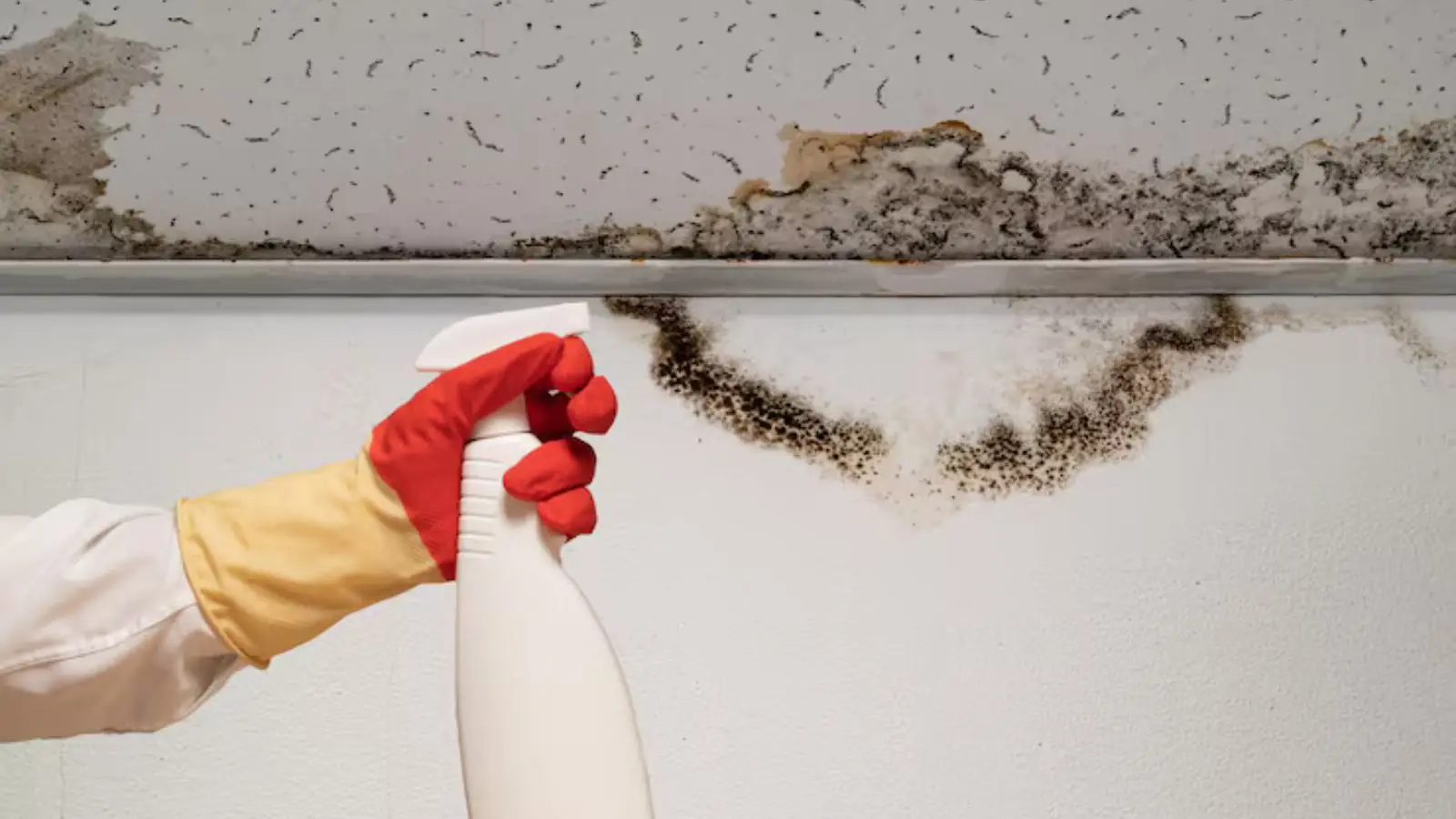
Black mold on a bathroom ceiling in Lynnwood, WA often turns out to be a moisture problem wearing a dark coat. The spots may be surface growth, dirt that clings to damp paint, or a stain from a leak above.
This guide covers the three usual causes, a short check you can do with a flashlight and a dry tissue, the mistakes that make things worse, and the point where a call to a crew makes sense.
Why bathroom ceilings darken first
A shower puts a lot of warm vapor into a small room. That vapor rises, meets the coolest surface it can find, and turns back into water. In most houses the coolest surface is the ceiling, especially under an attic with thin insulation or along an outside wall.
Paint and drywall paper hold that moisture for hours. Mold needs a damp, organic surface to grow on, and painted drywall paper qualifies. The corners and the area around the fan grille tend to show spots first because air moves less there.
The three usual causes
A weak or blocked exhaust fan
A fan that rattles, hums without pulling tissue to the grille, or vents into the attic instead of outdoors leaves the vapor in the room. Spots then spread in a halo around the fan housing and across the ceiling center.
A leak from above
A supply line, drain, tub overflow or toilet seal in an upstairs bathroom can seep for weeks. The stain usually has a tan or brown ring, the paint may bubble, and the spot can feel soft when pressed lightly.
Condensation on a cold surface
Cold roof sheathing, a gap in attic insulation or a duct run through unheated space can chill one patch of ceiling. Dark spotting follows that patch, often in a straight band that matches a joist or duct line.
Water still spreading? The emergency line is open around the clock.
☎ Call (425) 592-3399A ten-minute check before you touch the spots
Gather a flashlight, a dry paper towel, a stepladder and your phone camera. Work with the fan off and the door open so you can see and hear what is going on. Photograph the ceiling first so you can compare it a week from now.
- Hold a single square of tissue near the fan grille with the fan running. It should stick firmly. If it flutters or falls, airflow is weak.
- Look at the spot pattern. A halo around the fan points to ventilation, a single ring with a darker edge points to a leak, and a band along a joist points to condensation.
- Press a dry paper towel against the darkest area for five seconds. A damp towel means moisture is present today, not just in the past.
- Check the room above, if there is one. Look for a damp floor near the tub, toilet or sink, and for a rising water bill when no one is home.
- If you can reach the attic safely, look at the fan duct. It should run to a vent cap outdoors, be sealed at the joints and sit free of flattened insulation.
Write down what you find. A short note with dates and photos helps any crew you call, and gives you material for your own insurance conversation if a leak is involved.
Reading the pattern: a quick decision table
| What you see | Likely source | First move |
|---|---|---|
| Dark halo around the fan grille, dry to the touch | Weak or disconnected exhaust fan | Test airflow, clean the grille, check that the duct reaches the outdoors |
| Brown ring with a darker edge, paint bubbling | Active or past leak from above | Stop water use in the room overhead and call about moisture mapping |
| Dark band that follows a joist or duct line | Condensation on a cold surface | Look at attic insulation and duct wrap, then run the fan longer after showers |
| Spots return a few weeks after a wipe-down | Moisture still present behind the paint | Do not repaint. Have the drywall checked with a moisture meter |
| Soft, sagging or crumbling drywall | Long-term water exposure | Keep people out from under it and call the 24/7 line |
Color alone does not tell you what the growth is. Dark spots can be mold, dirt or stain, and only lab sampling or an inspection can say more. That is why the pattern and the moisture reading matter more than the shade.
What not to do
The urge to scrub and repaint is strong, and it often backfires. A few habits to skip:
- Do not paint over the spots with stain-blocking primer and call it done. If the drywall is still damp, the problem comes back through the paint.
- Do not spray the ceiling with several products in a row. Mixing cleaners can release harmful fumes, and bleach on porous drywall does not fix a moisture source.
- Do not sand or scrape the area. That sends fine dust into the room and spreads it.
- Do not cut into a ceiling that might hold wiring or a wet fixture box above it. Turn off the breaker for that circuit first if the area is wet.
- Do not push on a bulging or sagging patch. Water can pool behind it and release at once.
When it is time to call
Call when the ceiling is soft, when the spotted area is larger than a dinner plate, when you can confirm an upstairs leak, or when spots return after you have already fixed the fan. A crew can map moisture with a meter and a thermal imaging camera first. If the cause is an active leak, water mitigation work to dry the framing comes before any cleanup, and the written scope is explained before work starts.
If the growth itself needs removal, a licensed and insured crew can contain the room, run a HEPA air scrubber and remove affected drywall under the ANSI/IICRC S520 standard for mold remediation. You can read how that process works on the mold remediation service page. Ask any company whether your state licenses mold work and whether its crews follow S520. Questions about how mold may affect anyone in your household belong with a physician, not a contractor.
Lynnwood note: an older housing stock and what it means for your fan
The Census American Community Survey (2023 five-year estimates) puts the median year Lynnwood homes were built at 1979. The same data shows about 17,600 housing units in the city and roughly half built before 1980, with the 1960s the largest single decade at 4,038 units.
For a bathroom ceiling, that age matters in a practical way. Fans from that era were often small, loud and ducted with thin material, and many homeowners ran them less because of the noise. If your house dates from those decades, check the fan before blaming the paint, and ask whether the duct still reaches an outdoor cap. Homeowners in Mountlake Terrace and Edmonds can run the same fan check.
Questions we hear
Is the black stuff on my bathroom ceiling mold?
It might be, but you cannot tell from color. Dirt, dust, soot and old water stains can all look dark, and a surface that looks identical can be a different material.
A moisture reading plus an inspection is the practical next step. If you want lab confirmation, that is a separate testing step.
How long should I run the bathroom fan after a shower?
A common rule of thumb is to keep it running after the shower ends, until the mirror clears and the walls feel dry. A timer switch makes this easy to follow.
If the fan seems weak, fix the airflow first. Running a poor fan longer helps only a little.
Can I just repaint the ceiling after wiping it?
Repainting hides a symptom. If moisture is still reaching the drywall, the spots return under the new coat, and the paint can trap dampness against the paper face.
Confirm the ceiling is dry with a moisture meter and the source is fixed before any finish work.
Do older Lynnwood homes need a different bathroom fan than newer ones?
Not necessarily a different brand, but older fans are often undersized, worn or ducted into the attic rather than outdoors. Replacing the fan and duct together usually gives the best result.
Ask the city building department, Development & Business Services, whether your planned electrical or venting work needs a permit.
Have a question the answers above did not cover? Call the line and ask.
☎ Call (425) 592-3399