
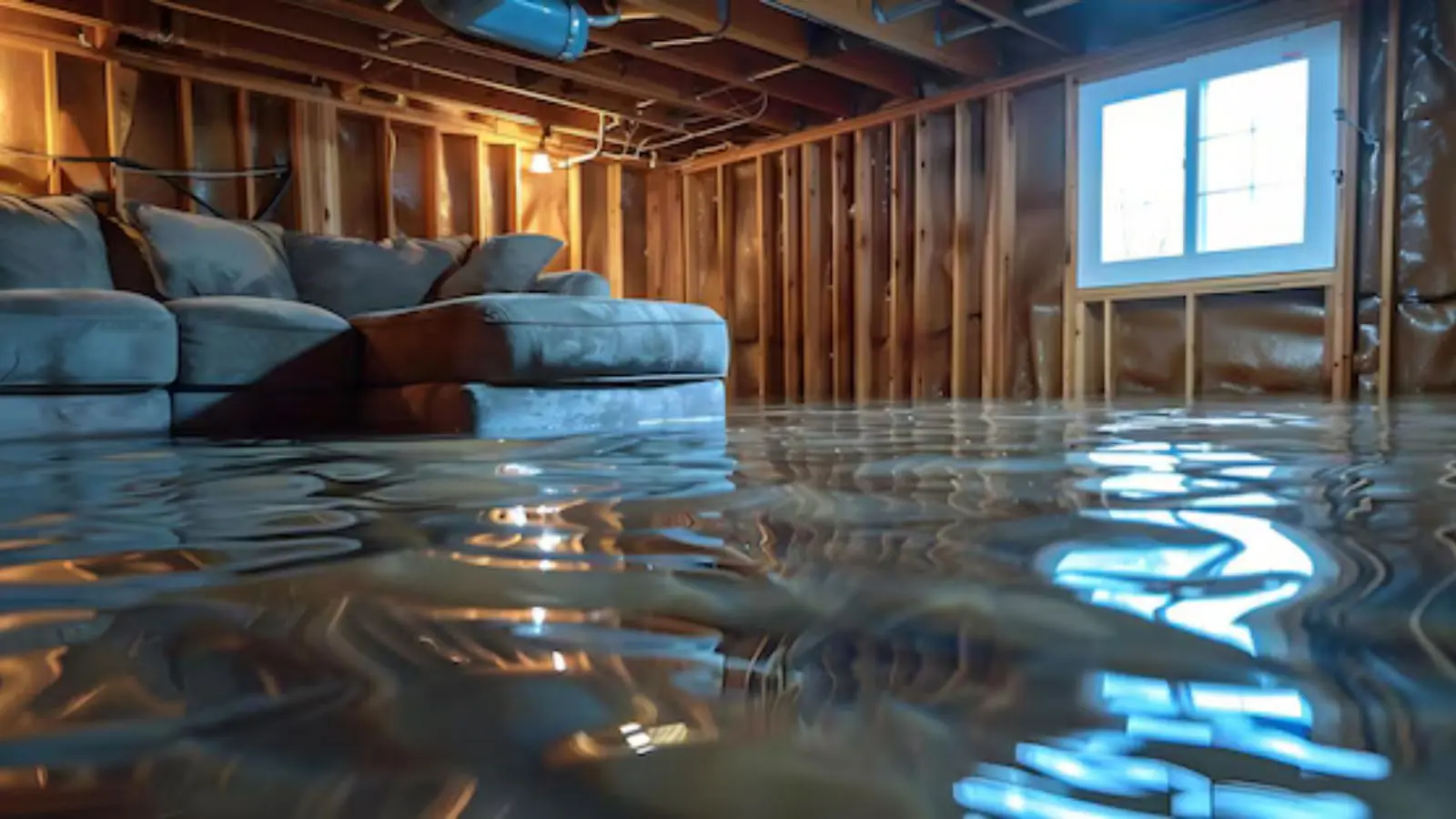
Basement water damage repair cost in Lynnwood, WA starts with a few plain questions. Where did the water come from, how deep did it get, and what is the floor and wall made of? Those answers set the work, and the work sets the price.
Basements are the lowest point in the house, so water settles there and soaks materials from below. This post walks through the cost drivers in order, from water type to contents, with no invented figures.
Why a basement is a different kind of job
Water in a first-floor room drains toward the floor and spreads thin. In a basement it has nowhere lower to go, so it pools, stands against the walls, and wicks upward into drywall. Concrete slabs hold moisture for a long time, and below-grade walls dry slowly.
Pumping and extraction also come first. Large basements need extraction units and sometimes a pump before any drying can begin. That early labor is a real part of the bill, and it is the part most affected by how long the water sat before anyone called.
Water category sets the starting point
The ANSI/IICRC S500 water damage standard sorts water into three categories. Category 1 comes from a clean source such as a supply line. Category 2 carries some contamination, such as washing machine discharge. Category 3 is grossly contaminated, and that includes sewage and most water that comes in from the outside ground.
The category changes the work in plain ways. Category 3 means carpet and pad come out, porous materials are removed, surfaces are cleaned and disinfected, and crews wear protective gear. A clean-water supply leak may let you dry more in place. Outdoor water that seeps in often starts at Category 3 or close to it, which is part of why flood damage restoration jobs cost more.
Water still spreading? The emergency line is open around the clock.
☎ Call (425) 592-3399Finished versus unfinished: where the money goes
An unfinished basement with bare concrete and storage shelves is mostly extraction, drying, and cleaning. A finished basement with carpet, drywall, a bathroom, and built-ins adds demolition, disposal, and a full rebuild. The table compares the pieces.
| Item | Unfinished basement | Finished basement |
|---|---|---|
| Extraction | Standing water removed from slab | Same, plus water trapped under flooring |
| Demolition | Little or none | Carpet, pad, lower drywall, sometimes baseboard |
| Drying | Slab, framing, walls | Slab, framing, wall cavities, subfloor if present |
| Disposal | Light | Often several loads of debris |
| Rebuild | Paint and sealing | Insulation, drywall, floor covering, trim, paint |
| Contents | Boxes, tools, stored goods | Furniture, electronics, rugs, appliances |
Notice that the drying row is similar in both columns. The big difference sits in demolition, disposal, and the rebuild.
Drying days and equipment
Drying is billed around equipment and time. Air movers push dry air across surfaces, LGR dehumidifiers pull moisture from the air, and HEPA air scrubbers sometimes run if materials were disturbed. Crews log moisture meter readings each visit and keep equipment running until the readings match dry reference points.
Most basement jobs need several days of drying, and concrete may take longer than the framing above it. A larger floor area means more units running for more days. That is why a written plan with the equipment count and expected drying range beats a flat promise.
Carpet pad, flood cuts, and contents
Carpet and pad
Pad is almost always discarded because the foam holds water and is inexpensive to replace. Carpet itself may be saved when the water was clean and extraction happened fast. Contaminated water usually ends that option.
Drywall flood cuts
A flood cut removes the wet strip along the bottom of the wall, often 2 feet up, so the cavity can dry. Insulation behind it is usually removed too. Rebuilding that strip, then taping, texturing, and painting to match, is where much of the finish cost sits.
Contents
Cardboard boxes, upholstered furniture, and particleboard shelving rarely survive. Electronics and tools can sometimes be cleaned and dried. A photo list before anything moves gives you a record for your own claim and helps the crew separate what to save.
When the cause belongs to a different trade
A restoration crew dries and rebuilds what water damaged. It does not fix why the water came in. A failed sump pump, a clogged footing drain, a cracked foundation wall, or poor grading outside is a job for a drainage contractor, a plumber, or a foundation specialist, and basement waterproofing is a separate trade from restoration.
Ask the crew to point out where the water entered and what moisture readings show. If the source is not fixed, the drying and rebuild can be repeated. For burst-pipe and appliance causes, emergency water removal is the usual first step, followed by repairs once the plumber is done.
Neighboring towns and what to expect
Basements in the area share many traits, from slab-on-grade foundations to partly finished lower floors. Crews that handle basement losses in Everett and Bothell work the same way, so the cost drivers above apply there as well.
Every basement still differs. For a real number on your house, call the 24/7 line.
Lynnwood note: Scriber Creek and the water that comes from outside
The City of Lynnwood's Scriber Creek Flooding Summary, a July 2014 final report on the City's own website, says flooding is concentrated between 188th St SW and 196th St SW. It documents events in 2006, December 2007, and November 2012, and lists undersized culverts, sediment, and storm drain overflow among the causes. The City's surface water pages also say its utility runs programs meant to reduce flooding.
The practical tie-back is about which category and which policy a basement loss falls under. If your water came from a pipe, it is a plumbing loss. If it came from the ground or an overflowing creek or storm drain, it is likely a flood loss, which standard policies usually exclude. Check the FEMA flood map for your address and ask your insurer. Photograph the water line, and do not assume a nearby address has the same problem as yours.
Questions we hear
I live near Scriber Creek between 188th and 196th St SW. Is a wet basement there a flood claim?
It depends on where the water entered. The City's flood study describes creek and storm drain overflow in that stretch, but a pipe, appliance, or sump failure in your own house is a different cause.
Photograph the water line, note the weather, and ask your insurer how it treats the source. Check the FEMA flood map for your address.
How long does a basement take to dry?
Several days is common, and concrete can take longer than the framing above it. The crew's moisture readings, not the calendar, decide when equipment comes out.
A written drying plan with expected visits helps you plan around the noise.
Will you fix the sump pump or the drain that caused it?
Restoration and drainage are different trades. A plumber or drainage contractor fixes the pump, line, or grading. We dry and restore what the water damaged.
Fix the source first, or drying can be undone by the next rain.
Is carpet in a basement always thrown out?
Not always. Carpet that got clean water and was extracted quickly may be saved. The pad usually goes either way.
Contaminated water usually means carpet is discarded.
Have a question the answers above did not cover? Call the line and ask.
☎ Call (425) 592-3399